In 2024, we amplified our impact
...with and through 580+ partners, mostly civil society
Reflections from Antara Ganguli, UNGEI Director
2024 was a pivotal year for UNGEI. In a year marked by challenges, we saw the transformative power of education spark hope and drive change in countless communities. We are filled with gratitude and inspiration from the incredible collective efforts made - in schools, in homes, in communities, in the corridors of power and in our own networks - towards a more equitable and peaceful world.
Our programmes addressed the most obstinate of social problems to create sustainable change. We did this by addressing systemic barriers, behaviours, and capacities. And we could do this because of our partners —young feminists, government leaders, civil society actors and activists. We challenged ourselves to become more effective champions for transformative education. We were reminded again and again that gender-transformative education is about more than just improving access to schools—it is about creating environments where every child, regardless of their gender, ability, or background, can learn, thrive, and contribute to building a more just and equal society.
Collaboration was at the heart of our work in 2024. We forged new partnerships and strengthened existing ones, working together to expand our reach and deepen our impact. We mobilized new communities, engaged broader audiences, and inspired collective action for gender equality in and through education.
2024 reminded us of the power of connection, determination, and shared purpose. And celebrating wins and sharing joy, even when we are up against lofty barriers. Thank you for walking this path with us. We are happy to share our achievements with you.
We catalyzed young feminist leadership
This year, young feminists from around the world continued to transform education for gender equality. We continued to challenge gender stereotypes, to advocate against the pushback on gender rights, and to ensure that all children received gender transformative education (GTE) during crisis and conflict.
As young feminists, we know that intergenerational partnerships are integral to achieving our collective goal of gender equality in and through education.
We also understand that resourcing young feminists is key through approaches that are participatory and context-specific. Education Shifts Power provides a model of what this looks like in practice and the power of considering young feminists as equal partners instead of vulnerable beneficiaries.
In the midst of multiple and intersecting crises, rampant misinformation, and worsening inequality, our collective future hinges on continued bold action to advance gender equality in and through education. Together, we can transform education and create a future of equality!
— Sapphire Alexander, Feminist and Youth Advocate, Transform Education Coordinator
We drove powerful programmes
Gender at the Centre Initiative (GCI)
Jointly coordinated by UNGEI and IIEP-UNESCO, the Gender at the Centre Initiative (GCI) supports Ministries of Education and national civil society actors in Africa, to advance gender equality in and through education. Through a whole-system approach, GCI builds technical capacity in gender, fosters political will, and supports the transformation of harmful gender norms.
Through the Gender at the Centre Initiative I learned from other countries how to effectively advocate for gender equality within my ministry and how to use data to make our education strategies more gender-transformative.” — Maimouna Kere, Director Inclusive Education, Girls’ Education and Gender Equality, Ministry of Basic Education, Burkina Faso
In the Central African Republic (CAR), results from our Gender Equality in Education Snapshot (GES) assessment led to the government developing the country’s first ever girls’ education policy. In Mali, UNGEI and UNICEF jointly supported the development of a new gender action plan for the Ministry of Education. GCI supported 3 Feminist Youth Coalitions, in Niger, Mali and Nigeria, to engage directly with Ministries of Education and help transform harmful gender norms within their communities.
This year, GCI started an innovative collaboration with the Global Partnership for Education (GPE) to strengthen education systems for gender equality. Together with IIEP-UNESCO, UNGEI launched the pilot in Côte d'Ivoire and Chad, to strengthen data collection and analysis, gender-transformative leadership, and civil society and youth-led gender expertise.
We put gender equality high on the political agenda during the African Union’s Year of Education in 2024. At the African Union Pan-African Conference on Girls’ and Women’s Education (PANCOGED) in Ethiopia, and the Continental Education Conference (CEC) in Mauritania, GCI convened Ministers of Education, donors, civil society, and young feminists, for energizing discussions on how to practically advance gender equality in education. Feminist Youth Coalitions fostered solidarity and inspiration in these discussions, through solidarity circles that created brave spaces for participants to share their challenges and hopes in the fight for gender equality.
Every educated girl is a brick laid in the construction of humanity. It is the promise that tomorrow will be better than yesterday. — Bachir Gentil, Poet
The Feminist Youth Coalition in Mali has enabled me to collaborate with other committed young people and to materialize my dream of advocating for gender equality and the rights of out-of-school girls. — Zeina Mohamed Ali, Mali Feminist Youth Coalition
Ending Gender Stereotypes through Schools
Gender stereotypes give rise to harmful social norms, gender-based violence, gender discrimination, inequalities and patriarchy. We can challenge and transform these stereotypes with the right education from an early age. Our multi-country programme ‘Ending Gender Stereotypes (EGS) in Classrooms through Play-Based Curriculum’ does exactly this. The programme helps adolescent girls, boys and children of all genders understand, question and reject gender stereotypes through school-level activities.
Our baseline and endline survey results prove that it is possible to transform knowledge, attitudes, and behaviors on negative gender stereotypes within a short timeframe, even with limited resources. Children in grades 3 to 5 in India demonstrated a significant shift.
All women teachers and 14% more male teachers rejected the idea that a woman’s most primary role is to take care of her home and cook.
Findings also emphasized that changing deeply ingrained gender norms and power dynamics requires sustained, and targeted interventions, and additional evidence. Read the programme brief and our blog.
We are excited to partner with UNICEF India, Plan International in Niger and Aahung in Pakistan for the second phase!
Together with the Partner Coalition for EGS, we launched the common Results Framework for the EGS in Schools programmes. Using this framework will enable cumulation across the work of different organizations, enabling small projects to come together into larger numbers. The RF-EGSbuilds on the evidence from the Learning Brief: EGS in Schools: Good Practices, Experiences and Lessons Learned by UNGEI and the Partner Coalition.
School-Related Gender-Based Violence (SRGBV)
Results of programme:
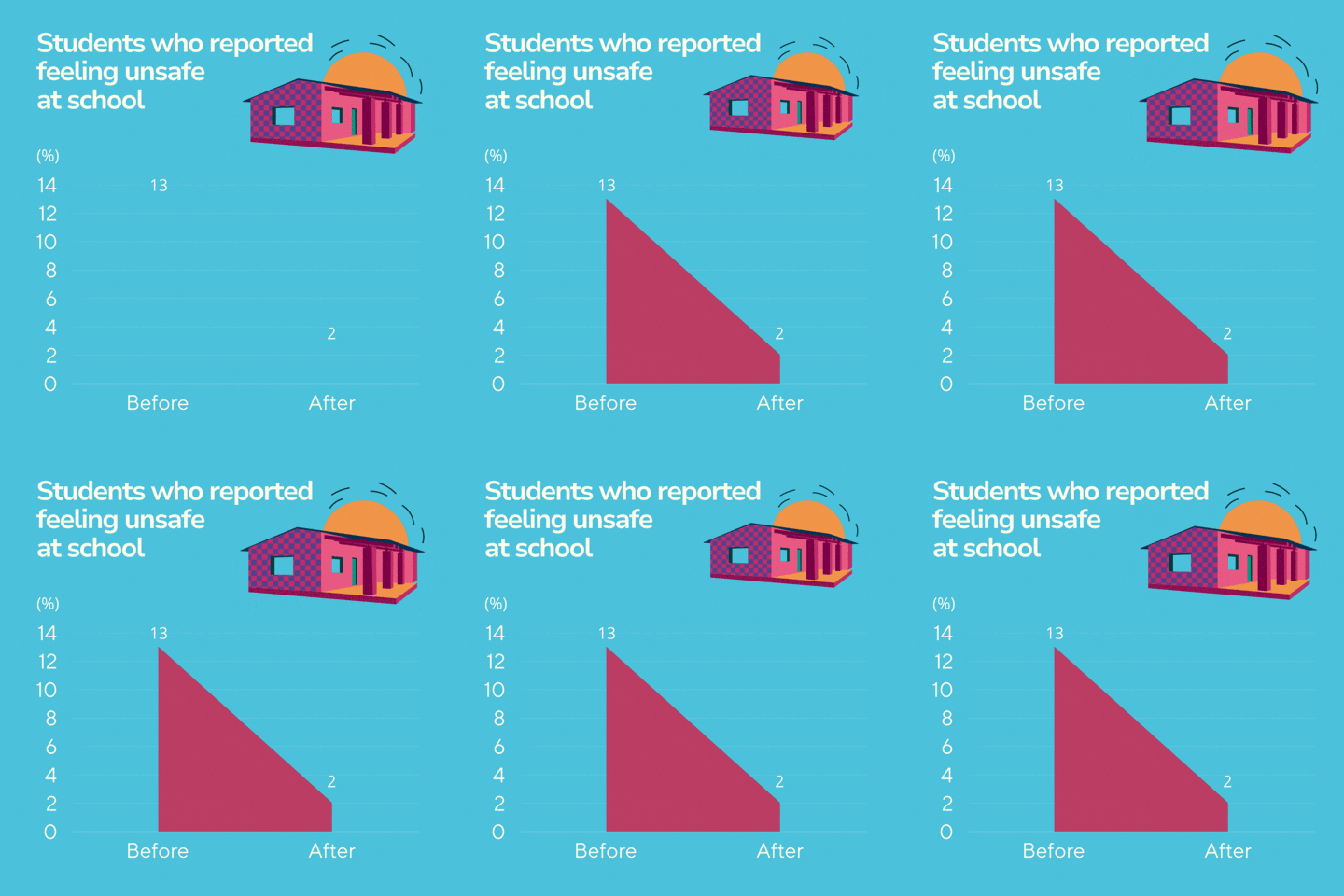
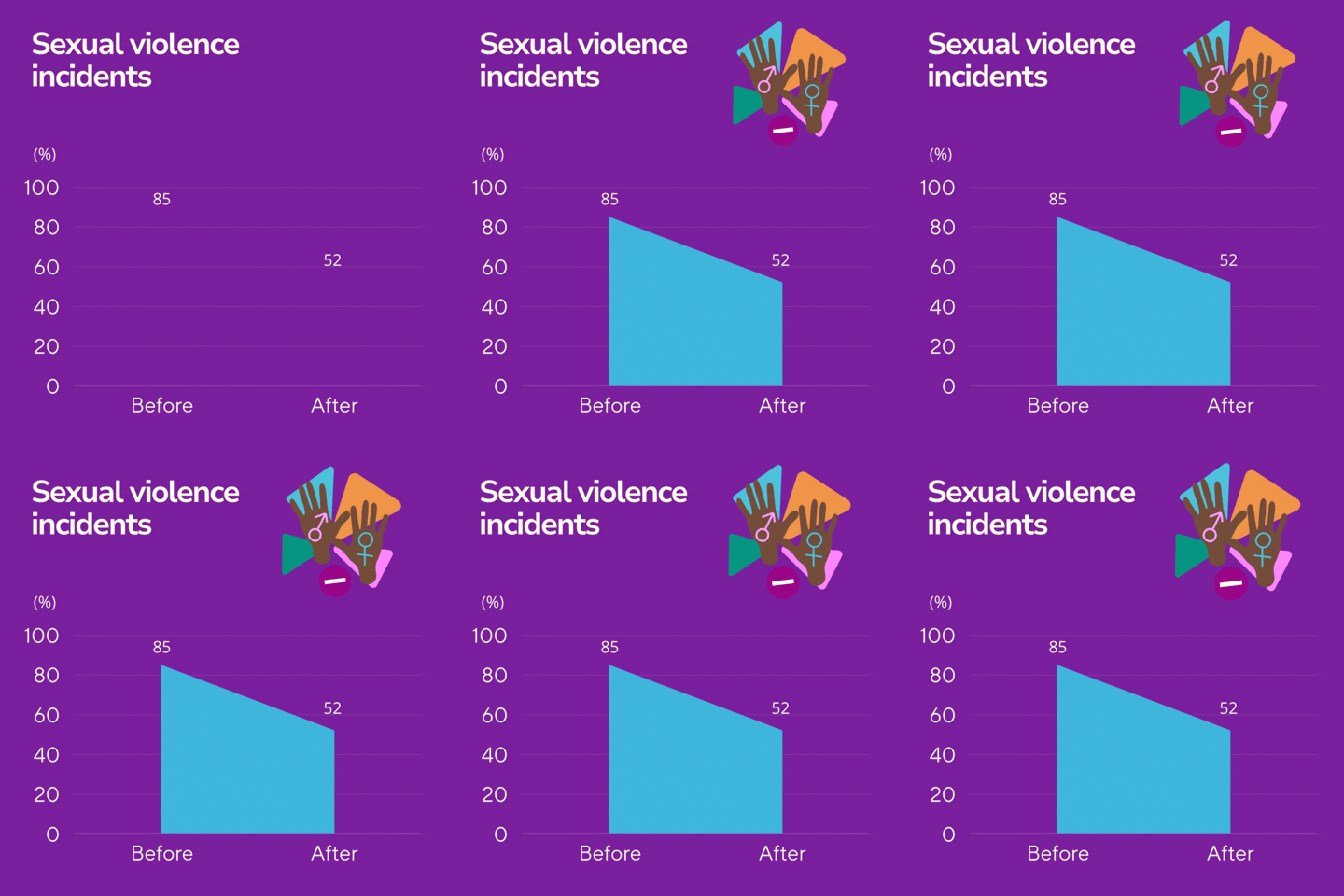
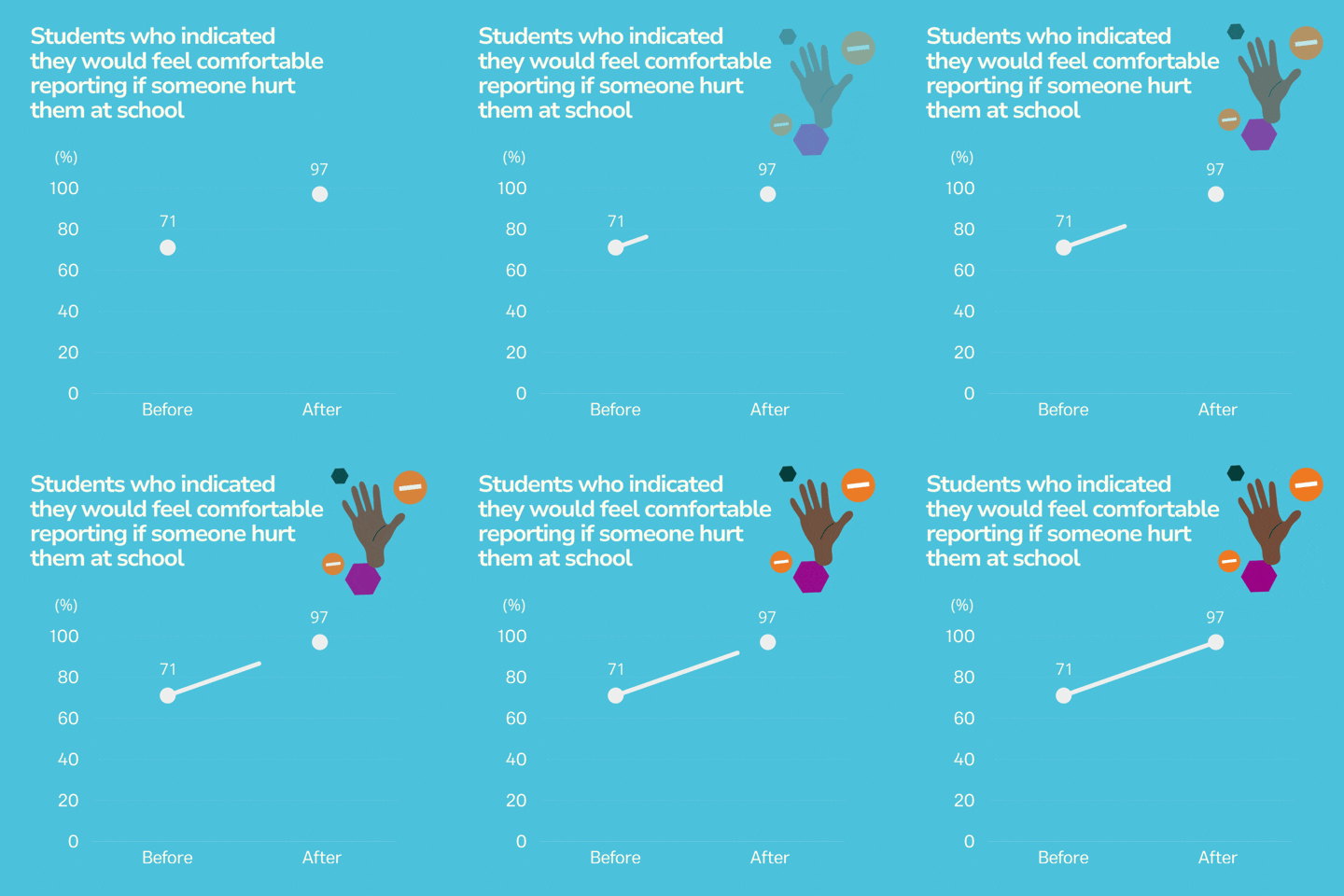
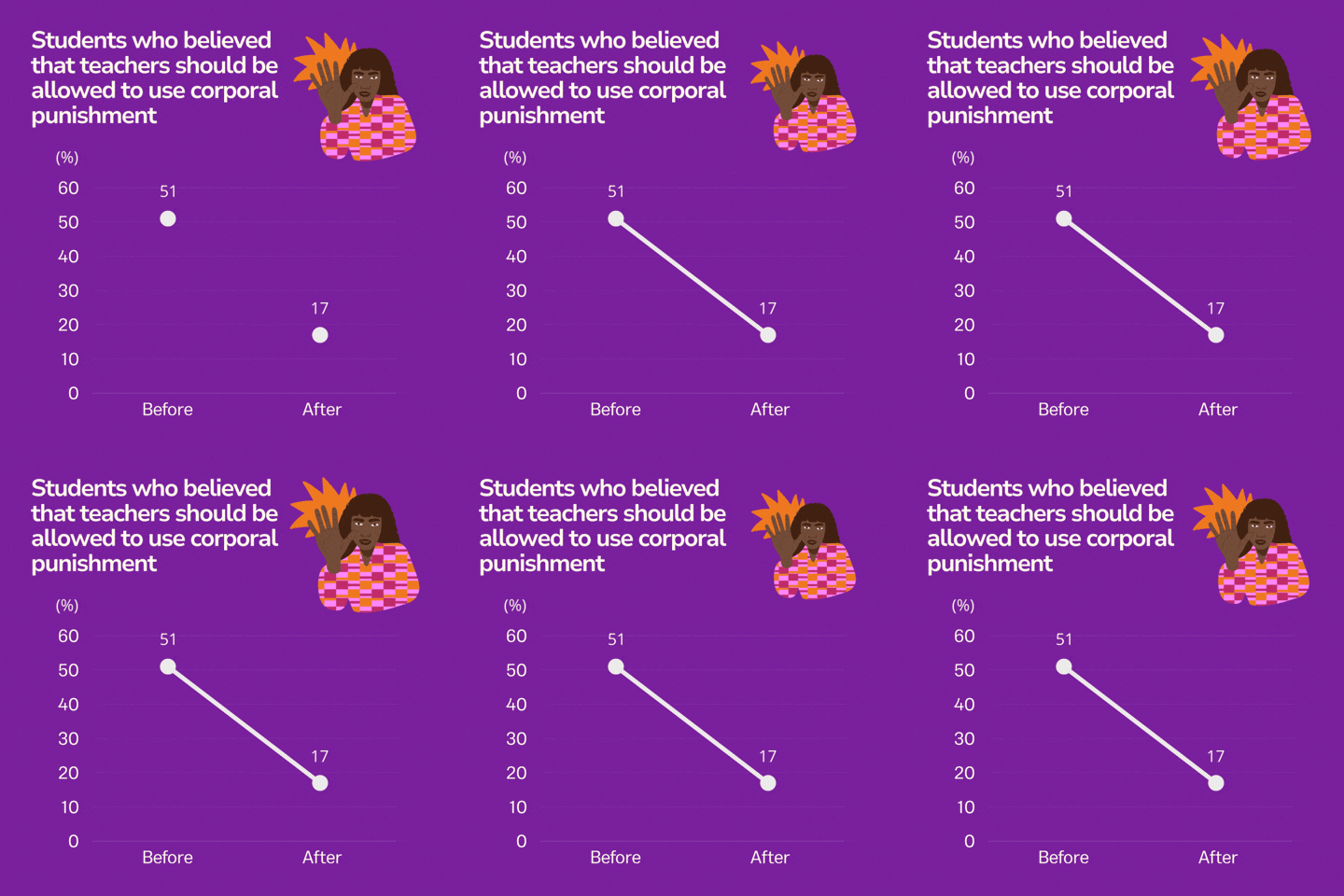
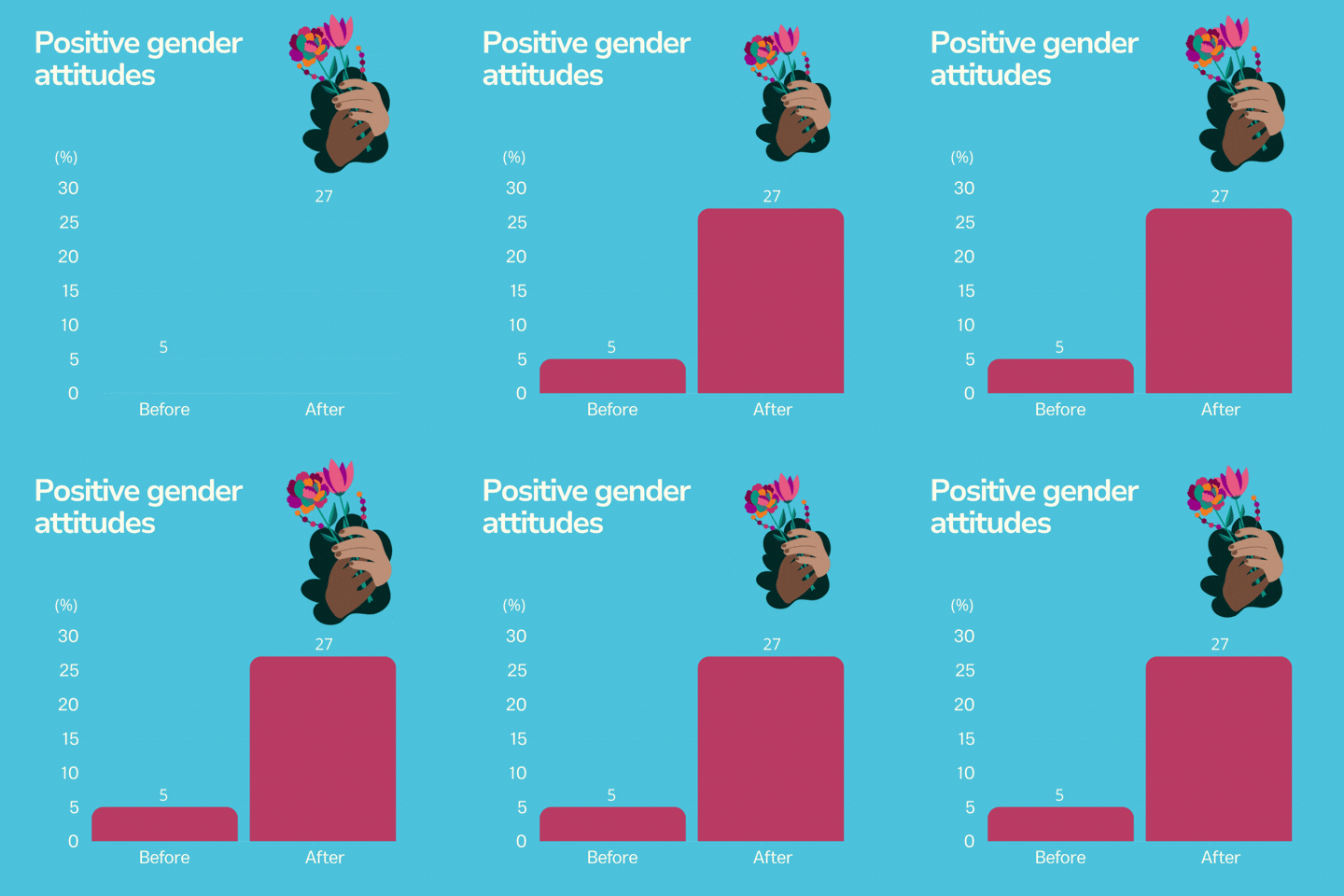
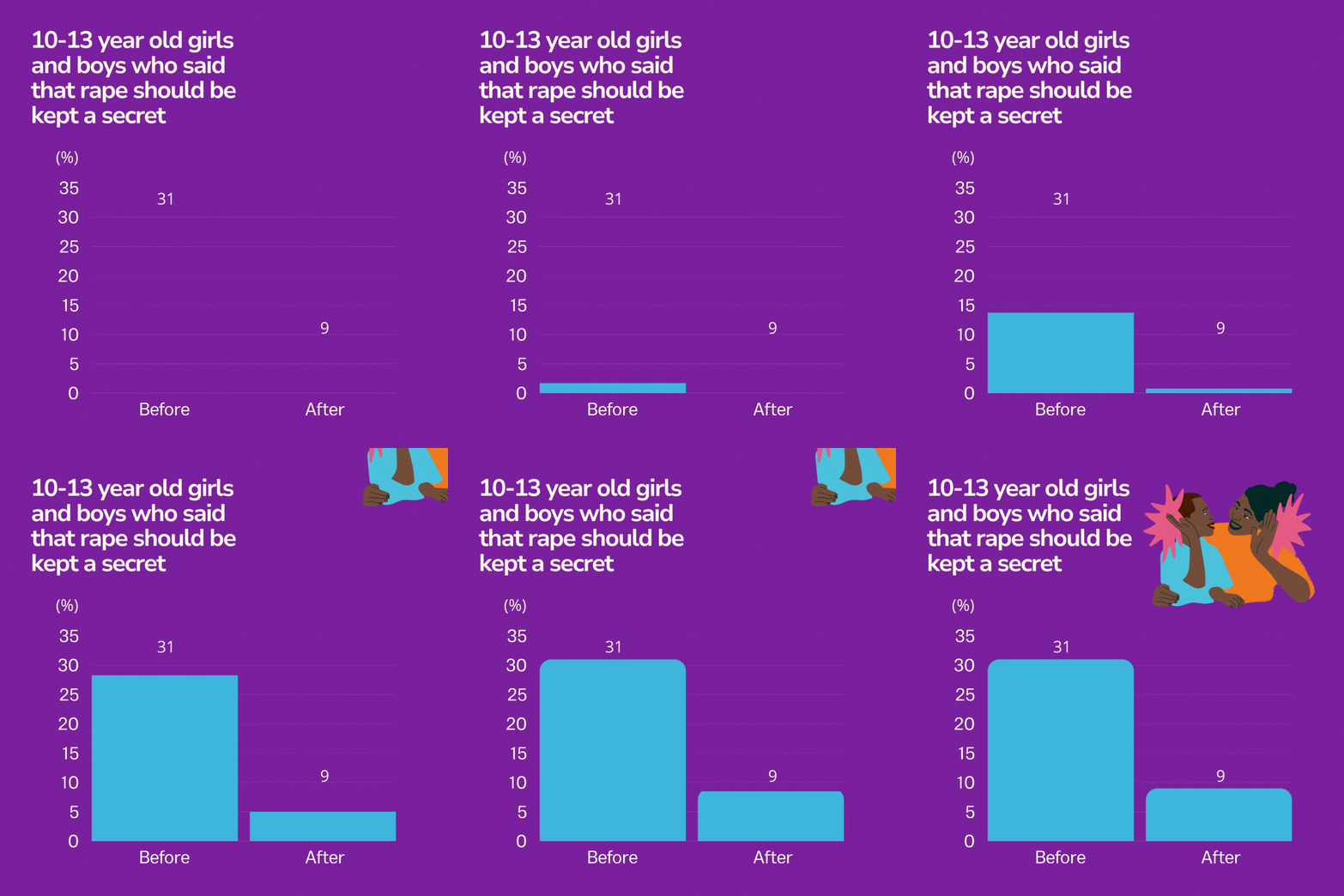
Read our Frequently Asked Questions about SRGBV and our case studies from Mozambique, Sierra Leone and Zimbabwe.
UNGEI, in collaboration with the Partner Coalition members, launched the Real Brave Change campaign, which is a movement towards a future free of gender stereotypes for everyone.
Feminist School
Developed by UNGEI and Gender at Work in 2021, Feminist School (FS) is an action and peer-based learning programme. It focuses on strengthening leadership skills and experiential learning in gender justice and education, targeting fierce feminists, born-to-be-feminists, closeted feminists and the feminist-curious within the education sector.
We developed the first ever Feminist Monitoring, Evaluation and Learning Framework for Feminist School. The framework systematically measures the impact of the school through a feminist lens, ranging from immediate to lasting changes among its participants.
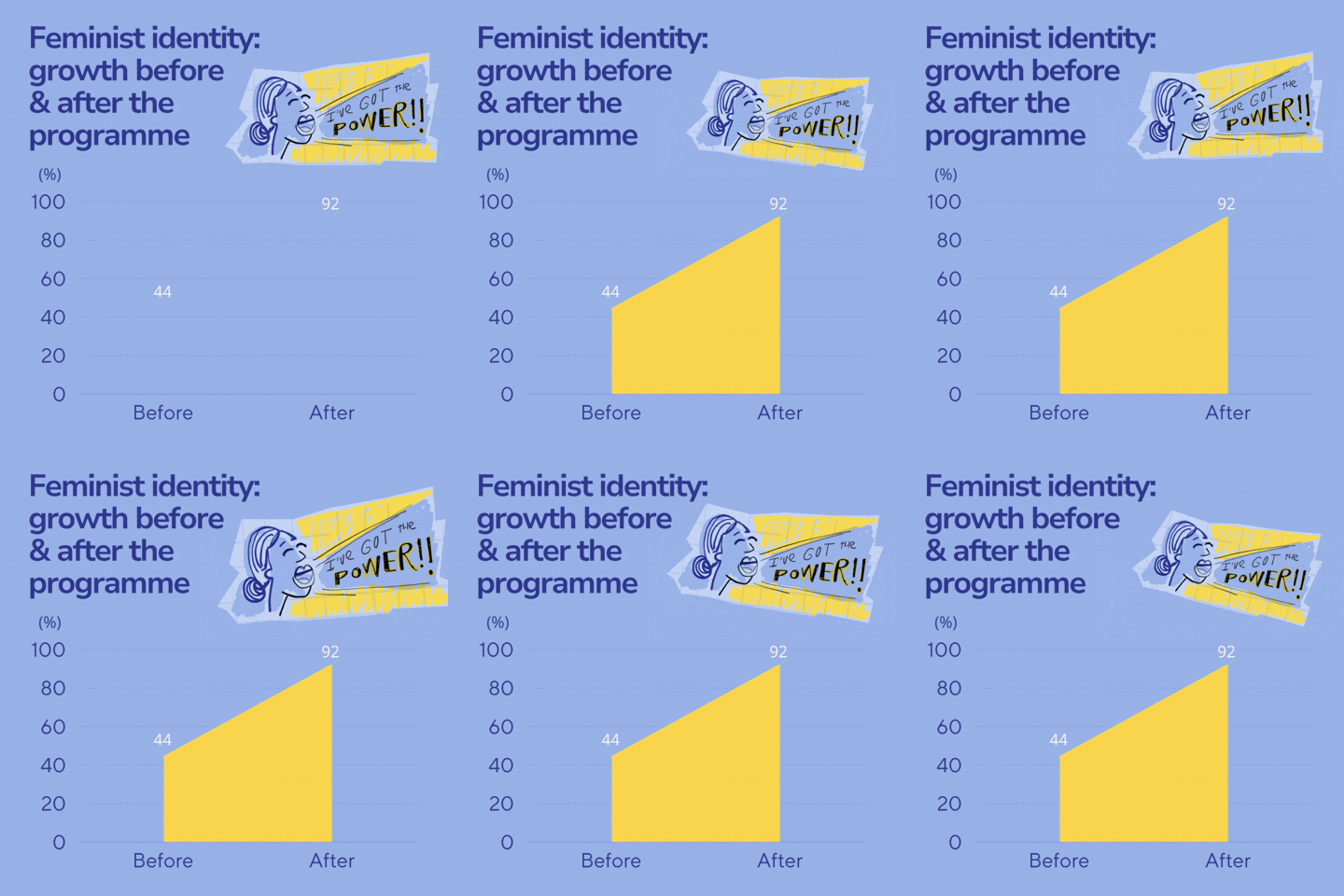
At the CSO edition of Feminist School, the percentage of participants who identified as feminists rose from 44% at the start of the programme to 92% upon completion.
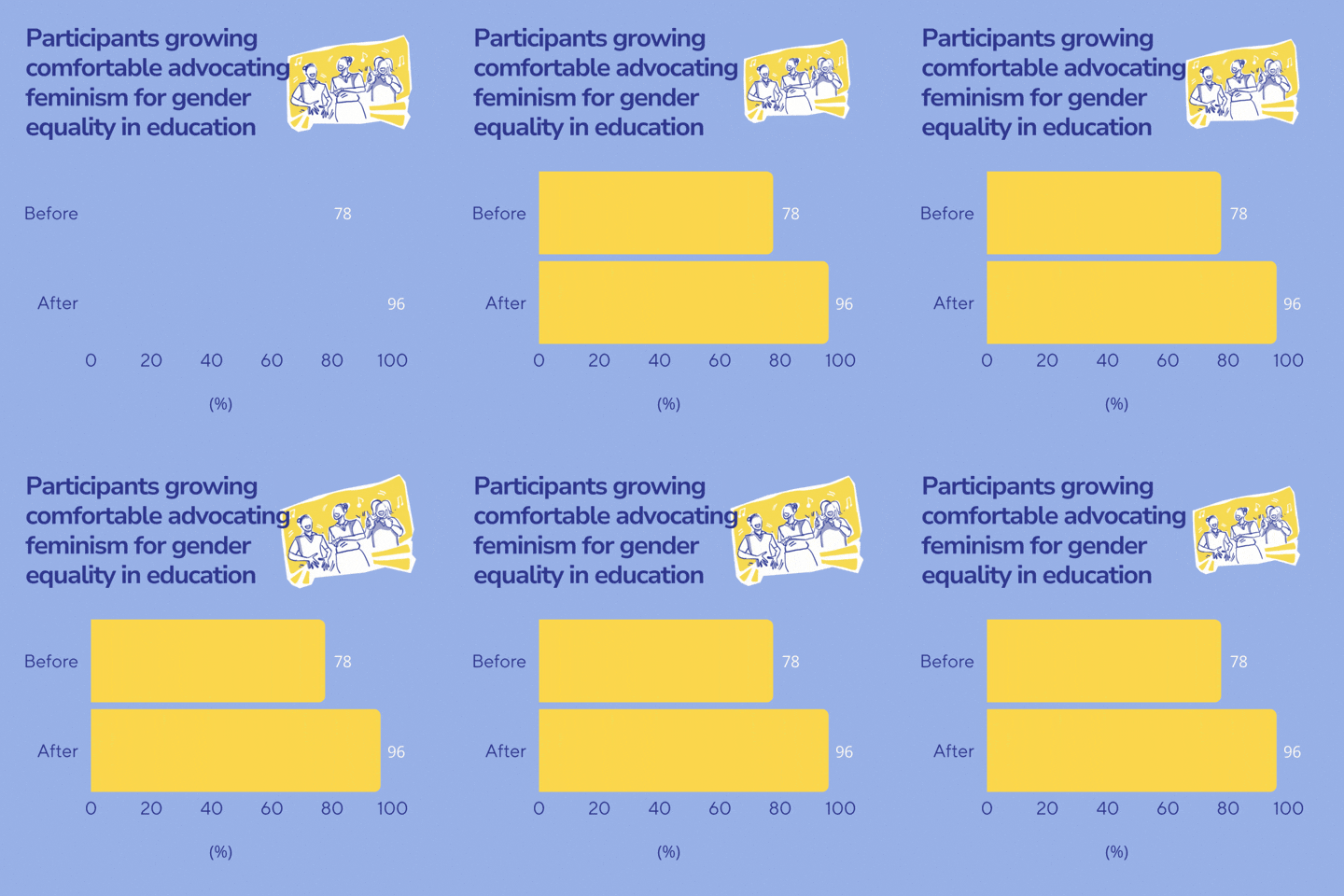
Additionally, the percentage of participants who felt comfortable discussing feminism in their efforts to promote gender equality in education increased from 78% before Feminist School to 96% afterward.
Feminist School Adolescent Girls edition created a powerful shift in the confidence of its participants, helping them recognize their worth and come into their voices. Many of the girls reported entering the programme feeling shy, hesitant, and unsure of their abilities. As one participant reflected,
I felt I couldn’t be a public speaker before, but now I feel happy and empowered to do what I thought I couldn’t.
Facilitators and focal points noticed a remarkable transformation in participants, as they began to speak up during discussions, sharing their opinions freely and embracing the idea that their voices mattered. One of the focal points observed,
They learned to say, ‘I am also important,’ which is something they’ve rarely been told.
The programme not only gave the girls tools to navigate challenges but also instilled in them the belief that their voices could create change. As one participant said,
I now understand that my voice can bring change, even in small ways.
During the Feminist School sessions, participants also developed individual action plans to build on their learnings. UNGEI will reach out to randomly selected participants to gain insights on sustained changes, constraints and challenges, to offer feasible post-workshop support to those who need it.
Feminist Network for Gender Transformative Education (FemNet4GTE)
The Feminist Network for Gender Transformative Education (FemNet4GTE) is a powerful, diverse and intergenerational movement of organizations, experts and government representatives, all working towards gender equality in and through education.
The four regional declarations on GTE were launched in Johannesburg under the auspices of the Minister of Education, Siviwe Gwarube. Sessions and spark moments were:
Going forward, the network will launch ‘The World We Want’ call to action on International Women’s Day 2025, building on the regional declarations to make a compelling case for our common vision, priorities, and strategies.
Education Shifts Power (ESP)
Education Shifts Power (ESP) is a feminist and intergenerational initiative committed to resourcing feminist youth-led organizations working on gender equality in and through education. Partners of ESP are CHEVS, Gufasha Girls, Plan International, UNGEI, The Social Changemakers and Innovators (SOCHAI) and Youth Innovation Transformation Trust (YITT).
Along with this funding, grantees were offered a learning programme to support their personal development and programme implementation. These grants led to compounding impact at various levels— in communities, organizations, and among individuals.
Adolescent girls: Nashipai (Kenya) led psychosocial support and mentorship camps for 60 adolescent girls who are survivors of FGM/C, GBV, child marriage, and teenage pregnancy. The adolescent girls reported gaining confidence, practical tools, and knowledge on the power of gender transformative education.
Schools: Pratisandhi (India) led the Safeguarding Classrooms project, designed to equip school teachers with the tools and strategies to combat gender stereotypes in classrooms. The grantee developed a workshop and a workbook, and trained over 2000 teachers, indirectly reaching an estimated 106,500 students through the project.
Organizational capacity: Collectif Kreye (Haiti) had to move from Port-au-Prince to the south because of gang violence. They had lost everything, and had neither internet nor electricity, which made it even harder to deliver on their priorities. “Thanks to this funding we were able to solve these two major problems. The training sessions greatly improved our working methodology for this project, providing us with new skills and consolidating our approach.”
Transform Education
Transform Education
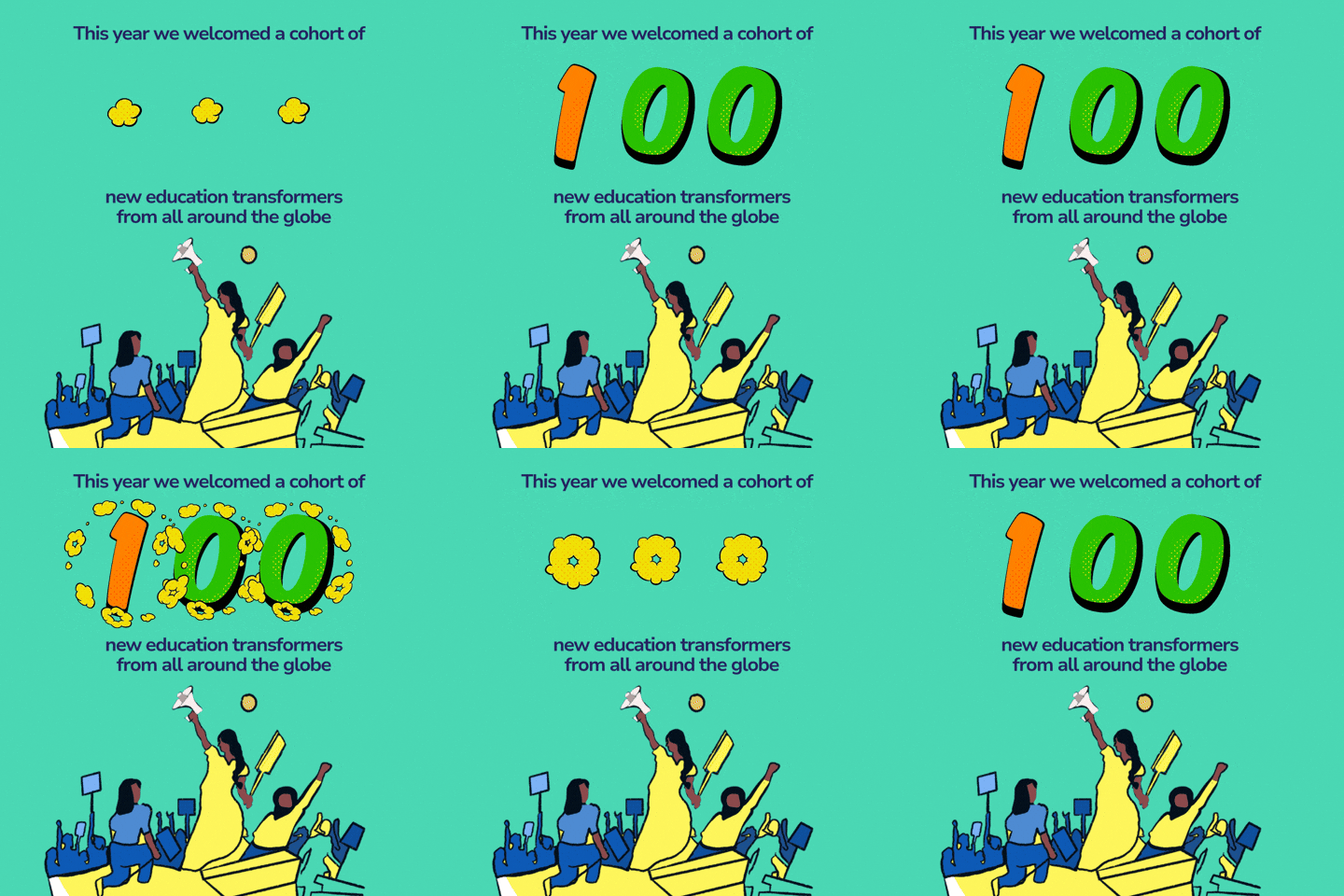
In 2024,Transform Education (TE) exemplified its mission of creating a space for young feminists to connect, learn, access opportunities, mobilize and advance gender transformative education. From implementing gender-transformative education programmes in their home countries, powered by the Education Shifts Power grant, to winning international awards, 2024 emphasized how powerful our network of education transformers truly is. TE members represented us well by bringing gender transformative education into key advocacy spaces such as the Summit of the Future, PANCOGED, FEMNET4GTE, ISPCAN, CSW68, and more. They partnered with the University of Windsor on a research project on youth-led feminist activism for gender transformative education, and alsowith the Global Education Coalition on a power map of the gender equality and education sector.
TE’s 5th anniversary brought a lot to celebrate as we convened members for a birthday celebration to commemorate all that TE has achieved. We launched TE at 5, a year-long initiative aimed at mobilizing resources and strengthening our network. We can't wait to see what we accomplish in 2025!
Advocacy for GTE
At the UN Summit of the Future in September in New York, UNGEI and the Population Council convened a side event on ‘Why Feminist Education is key to achieving all the Sustainable Development Goals’.
I am happy that at the start of the Summit of the Future the UN is coming together — rallied by UNGEI — to drive feminist education forward. — Nyaradzayi Gumbonzvanda, Deputy Executive Director, UN Women
Education is the greatest equalizer we have, and we need to invest in education that actively counters gender stereotypes. — Isabelle Rome, Human Rights Ambassador, Ministry for Europe and Foreign Affairs, France
Our communications reached millions!
In 2024, UNGEI connected with millions of people worldwide, sharing stories and sparking conversations about gender equality in education. Through engaging content and powerful campaigns, we reached larger audiences than ever before, inspiring action and building momentum for change.
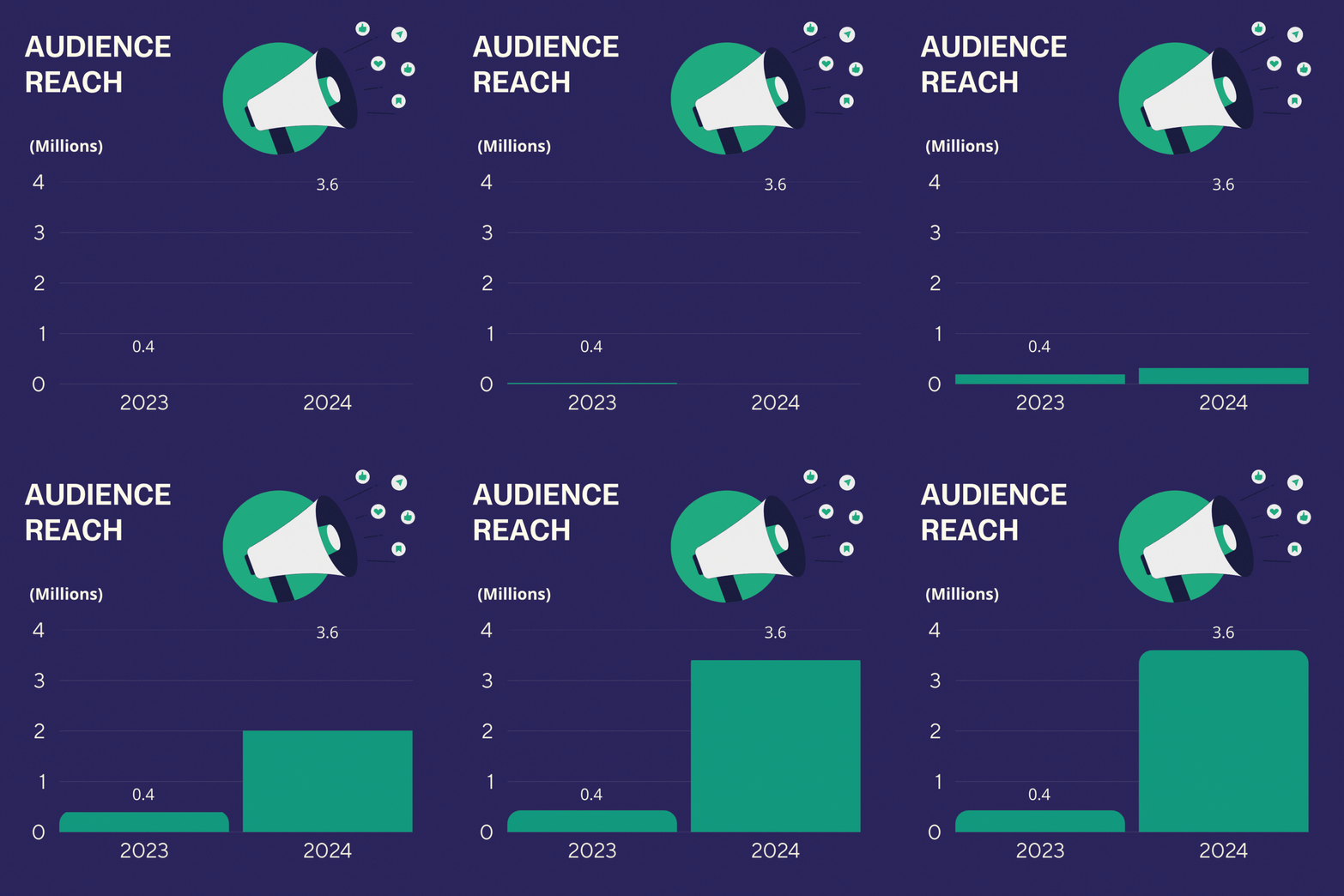
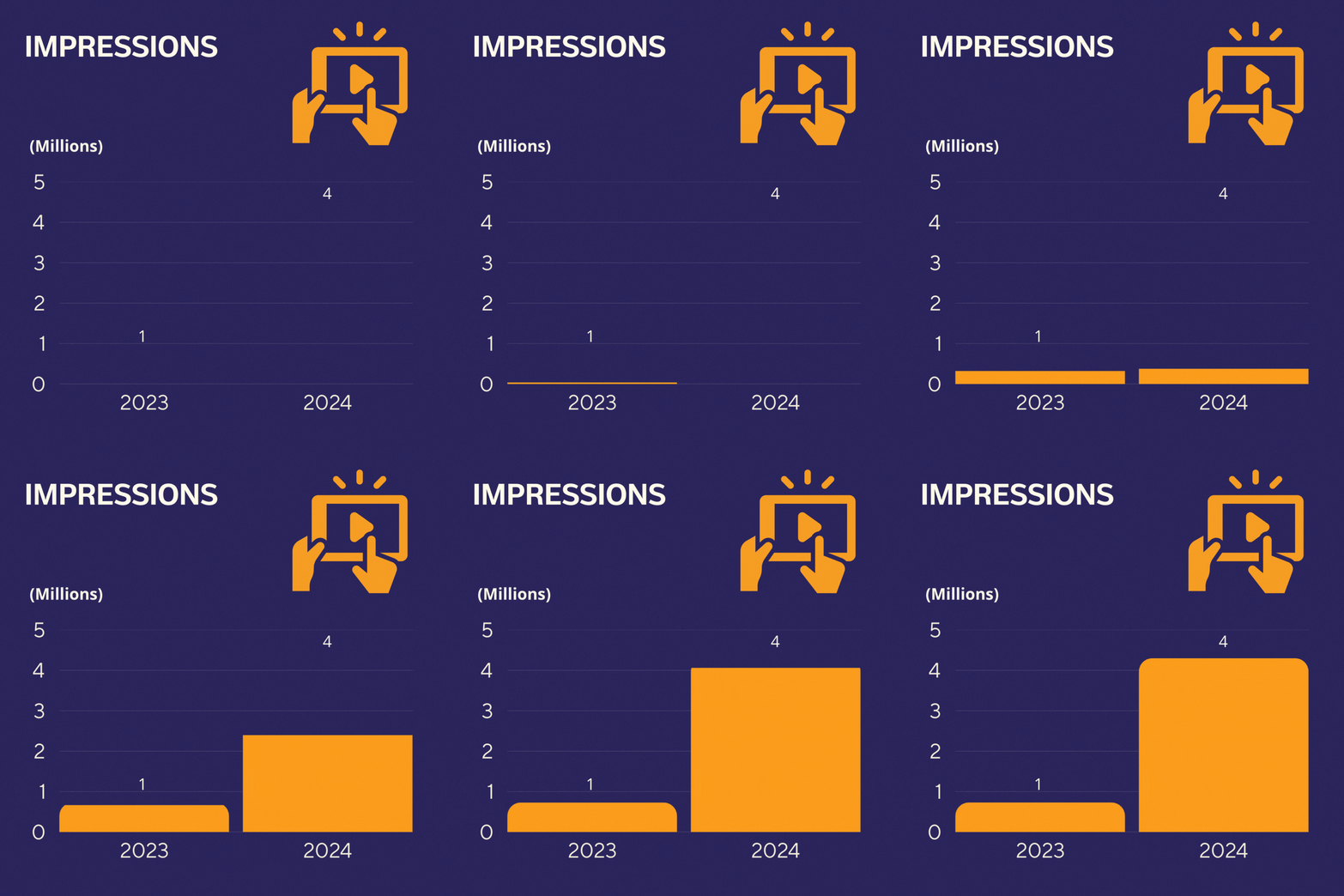
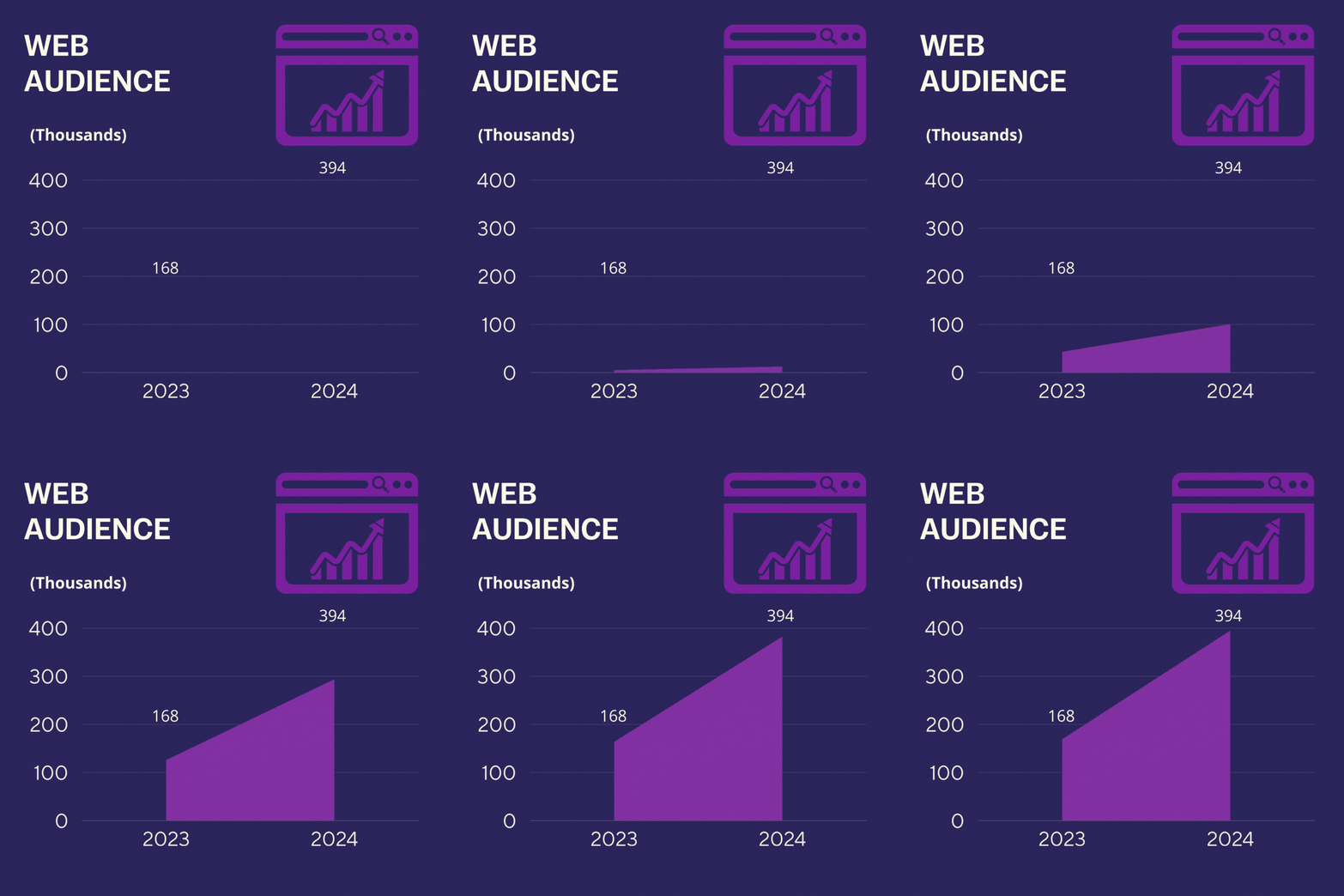
In the past year, our website became a vibrant hub for advocates of gender equality in education, drawing a growing global audience.
New followers are soaring! Instagram grew by an impressive 122% over last year’s growth, while LinkedIn skyrocketed with a 191% increase, showcasing unstoppable engagement and vibrant audience expansion across both platforms.
In 2024, we achieved 10K follower growth across our social media platforms, bringing our total follower base to 230K.
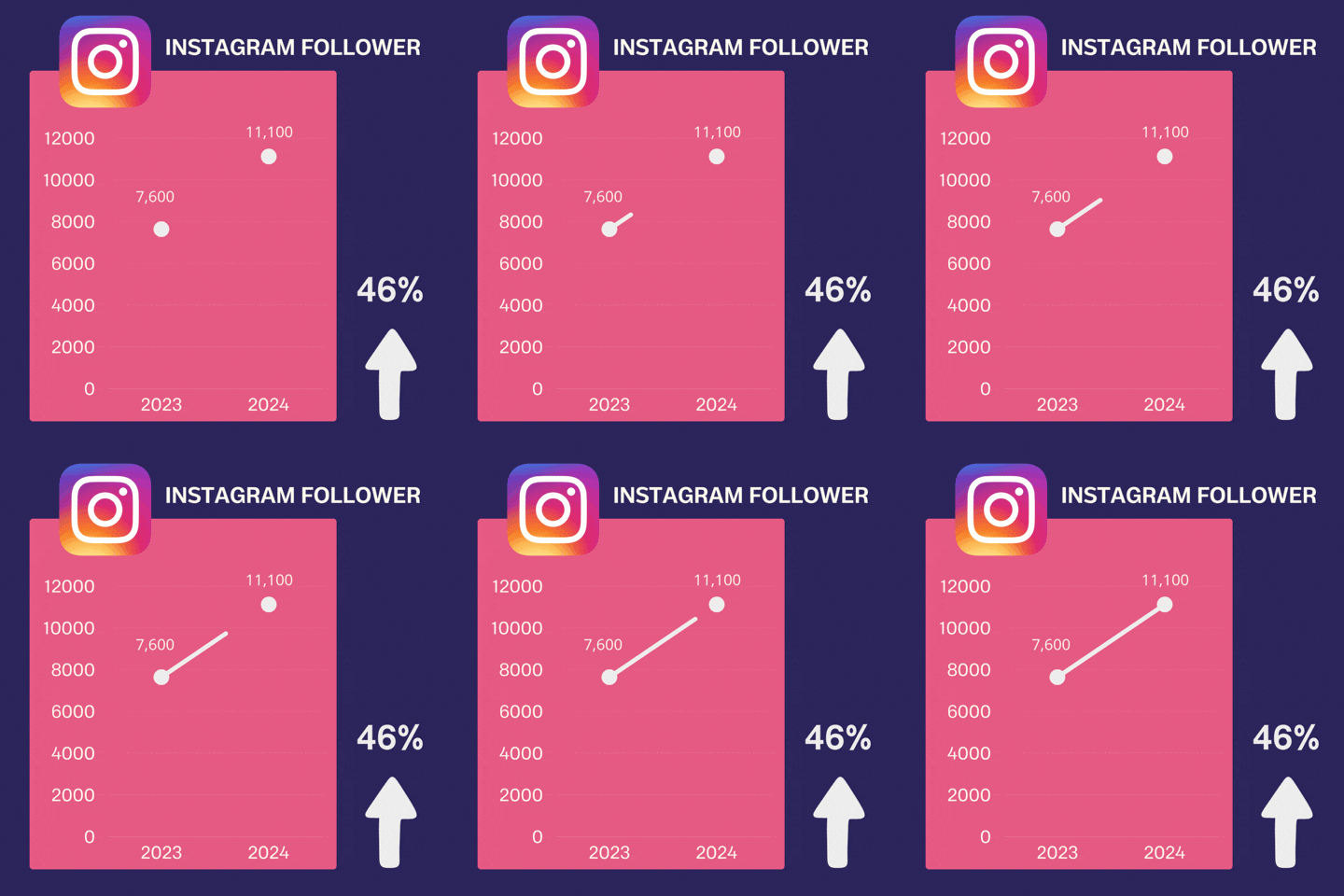

New followers are soaring! Instagram grew by an impressive 122% of last year’s growth, while LinkedIn skyrocketed with a 191% increase, showcasing unstoppable engagement and vibrant audience expansion across both platforms.
In 2024, UNGEI connected with millions of people worldwide, sharing stories and sparking conversations about gender equality in education. Through engaging content and powerful campaigns, we reached a broader audience than ever before, inspiring action and building momentum for change.
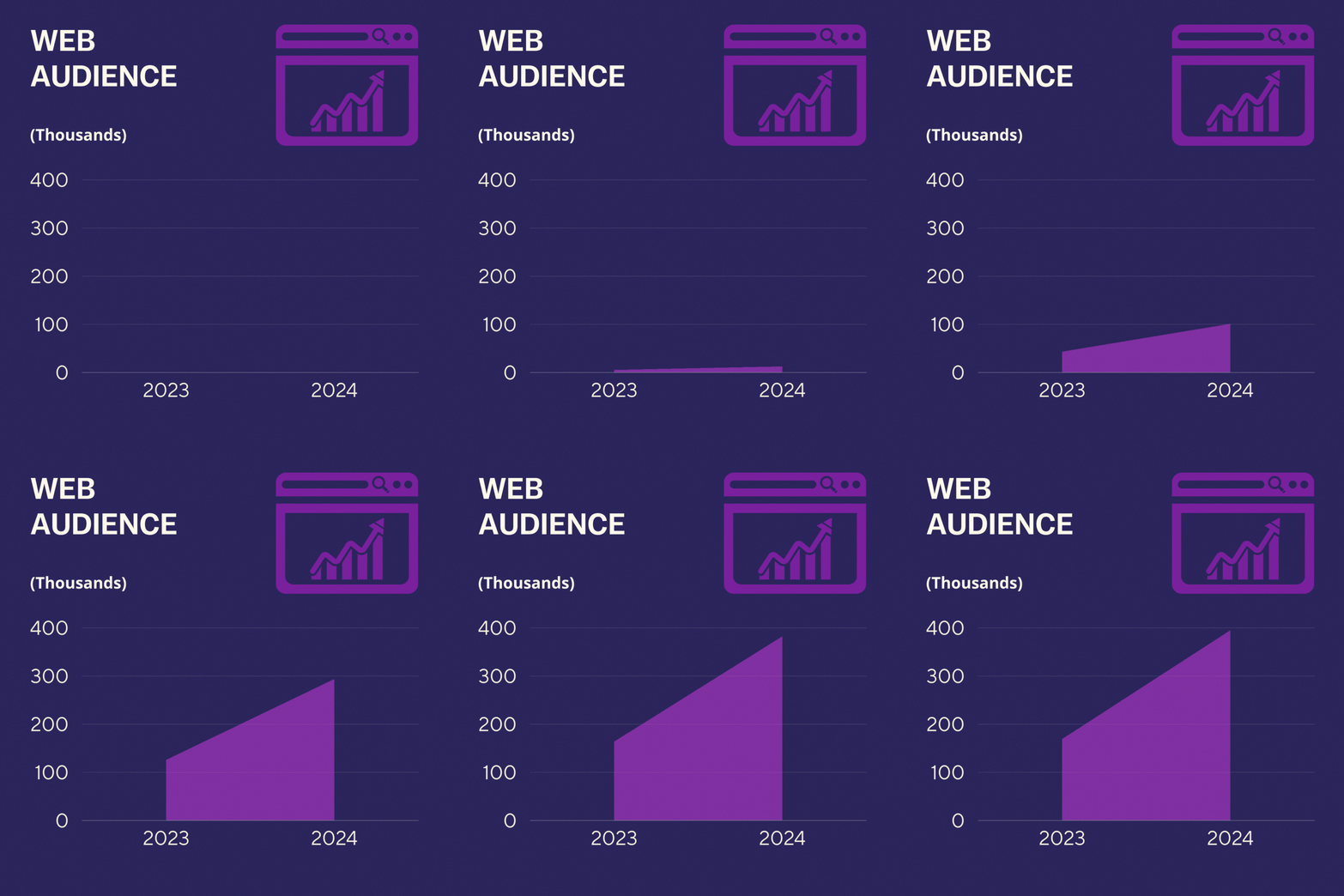
In the past year, our website became a vibrant hub for advocates of gender equality in education, drawing a growing global audience.
In July 2024, we launched the 'Latest from UNGEI' monthly newsletter—a fresh and engaging platform to connect with our global audience. Featuring insights, opportunities for engagement, and key updates, the newsletter has quickly become a vital channel for fostering dialogue and sharing progress on advancing gender equality in education.
We launched 11 game-changing knowledge products!
Gender-Transformative Education (GTE) Glossary
The Gender-Transformative Education (GTE) Glossary was officially launched at FemNet4GTE 2024 in Johannesburg, South Africa, after a rigorous consultation with 200 individuals and 38 experts over two years. The GTE Glossary clarifies key terms such as “gender-responsive,” “gender-sensitive,” and “gender-transformative,” among others. The purpose of this glossary is to put together in one place all the terms associated with gender equality in and through education and define them so that we are all using these terms to mean the same things.
The Lancet Article
In June 2024, we contributed to a groundbreaking article, Building Safe Societies Out of Safe Schools: Protecting the Rights of Schoolgirls, published in The Lancet, emphasizing the urgent need to address the rights and safety of schoolgirls, particularly in the wake of escalating abductions in Nigeria.
White Paper Prevention Of Sexual Violence in Education Settings
We built a unified call to action to end sexual violence in education settings through an Open Letter addressed to governments attending the First Ministerial Conference to End Violence Against Children in November 2024 in Colombia. Over 200 activists, CSOs, young people, universities, and governments championed the call to action. This Open Letter is based on the White Paper Prevention Of Sexual Violence in Education Settings, launched in partnership with the Sexual Violence Research Initiative, with contributions from the Global Working Group to End SRGBV.
The white paper highlights evidence on the prevalence of sexual violence in education settings, unpacks the nature of the problem, and articulates the need to work across levels of society to prevent and address sexual violence in education settings.
We strengthened our partnerships and mobilized transformational resources
Financial Support
In 2024, UNGEI successfully mobilized 4.14 million dollars to advance gender-transformative education. We are deeply grateful to Wellspring, GPE, France, Norad and ECW for partnering with and supporting our joint work.
We remain deeply grateful to the donors whose support (received in previous years) enabled our work in 2024: Department of Foreign Affairs, Trade and Development - Government of Canada, German Federal Ministry for Economic Cooperation and Development (BMZ), Wellspring Philanthropic Fund, LEGO Foundation, Echidna Giving, German Agency for International Cooperation (GIZ), and the United Kingdom of Great Britain and Northern Ireland (FCDO).
The generous support and continued trust of our donors in UNGEI’s mission have been instrumental in advancing our shared goals for a just and equal world. Through these partnerships, we continue to harness the power of gender-transformative education to create lasting change for children and communities worldwide.
GPE’s partnership with UNGEI is hugely valuable – we share the same ambition and commitment to gender equality in and through education. This year has seen a strengthening of our partnership at country level through the launch of our support to the Gender at the Center Initiative in Chad and Cote D’Ivoire. We look forward to continuing our work together in 2025! — Sally Gear, Practice Lead, Gender Equality and Inclusion, GPE
We have a long road ahead, but we believe it can be done. We would love your support to help us increase the life-changing impact of our work! Whether through funding or other contributions, your support can make a real difference. Reach out to us to explore how you can be part of this journey!
Meet the UNGEI Team
Our 2024 milestones are a testament to the power of teamwork, shared purpose, and solidarity within the UNGEI family. Grounded in the principles of our Feminist Manifesto, we strive to embody inclusivity, mutual respect, and collective leadership. Together, we tackled challenges, celebrated wins, and pushed boundaries to drive transformative change. Whether crafting bold campaigns, amplifying unheard voices, or building bridges for collaboration, every achievement reflects the heart and soul of a team united by a shared vision: Advancing gender equality in and through education and creating a better world for all learners. Now, meet our lovely and vibrant team!
Looking ahead, we remain steadfast in our commitment to championing gender equality in and through education. We invite you to join us in this journey—whether by partnering on new initiatives, amplifying our collective voice, or advocating for policies that leave no learner behind. Together, we can shape a brighter, more equitable future for every child, everywhere.
Credits:
United Nations Girls' Education Initiative