THE TOPIC
Today, we're stepping out onto the playing field, not to talk about touchdowns or home runs, but instead, delving into the renewed debate about team names, specifically those of the Washington Commanders and the Cleveland Guardians, and the recent pronouncements from a very prominent voice.
For years, the names "Washington Redskins" and "Cleveland Indians" were deeply ingrained in the fabric of American sports. They carried decades of history, tradition, and for many fans, cherished memories. But for just as many years, and in fact for much longer, those names were also a source of deep pain, offence, and protest.
Native American groups, activists, and allies consistently argued that these names, and particularly the imagery associated with them like Cleveland's "Chief Wahoo" logo, were derogatory caricatures.
They were seen as perpetuating harmful stereotypes, reducing entire cultures to mere mascots, and disregarding the history of oppression faced by Indigenous peoples.
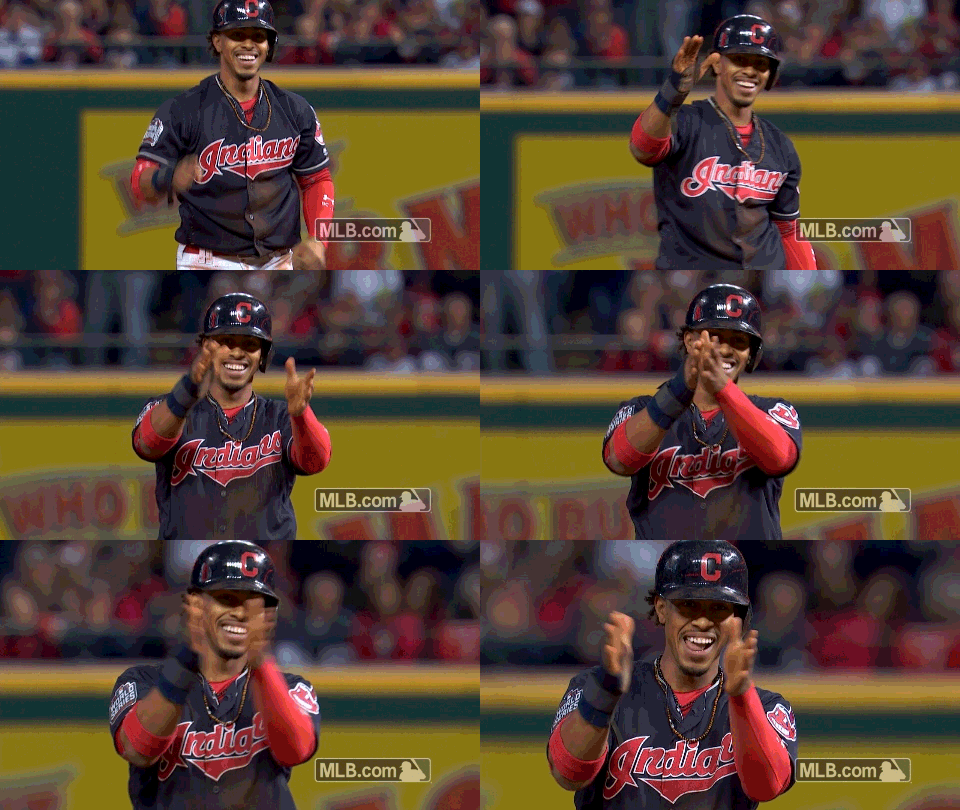
The debate wasn't new, but in 2020 and 2021, amid a broader national reckoning on issues of racial justice and systemic racism, both organizations finally made the monumental decision to change. The Washington Football Team eventually became the Commanders, and the Cleveland Indians transformed into the Guardians.
For many, these changes were long overdue, a necessary step towards inclusivity and respect. For others, they were a frustrating concession to "cancel culture," an erasing of cherished tradition.
Enter a president...
Now, the conversation is back in the spotlight, reignited by President Trump. He has publicly and forcefully expressed his wish for both teams to revert to their former, controversial monikers.
For the Washington Commanders, he hasn't just offered an opinion; he's tied it to a significant political leverage point, suggesting he might "put a restriction" on a potential new stadium deal in Washington if the team doesn't shed what he called the "ridiculous moniker" of the Commanders and go back to the Redskins.
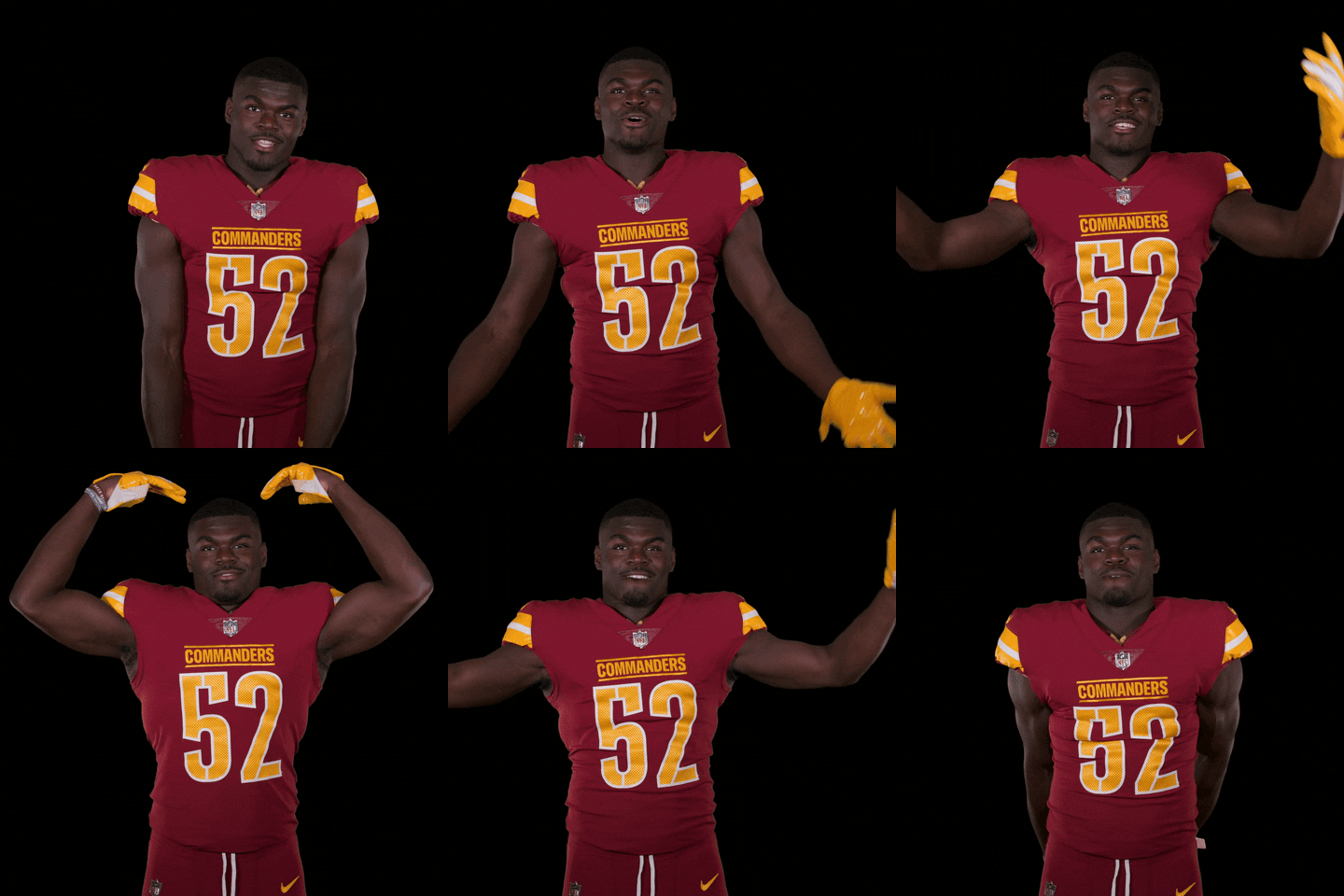
He has argued that the old name would make the team "much more valuable" and, perhaps most controversially, claimed a "big clamouring for this" from "our great Indian people," even going so far as to launch a campaign he's dubbed "MIGA: Make Indians Great Again." He's applied similar pressure to the Cleveland Guardians.
This stance, of course, throws a deeply contentious issue back into the national discourse. On one side, you have those who see these name changes as part of a broader cultural shift towards greater sensitivity and justice. They argue that the emotional harm caused by these names far outweighed any historical attachment. For them, the teams made the right, if belated, decision.
On the other side are those who feel that the changes were unnecessary, driven by a vocal minority, and that the original names were intended to be honourable, not offensive. They lament the loss of what they consider tradition and history, often feeling that these decisions are examples of "cancel culture" run amok.
And President Trump's position resonates strongly with this latter group, framing the issue as a defence of traditional American values against what he portrays as an overzealous progressive agenda.
So, where do the teams stand now? Both the Washington Commanders and the Cleveland Guardians have been unequivocal: they have no plans to revert. The ownership groups have publicly reaffirmed their commitment to their current names, emphasizing the extensive process they undertook to arrive at these new identities and the positive embrace they're seeing from their fan bases, many of whom have invested in new team merchandise and adopted the new brands.
They're trying to move forward, to build new traditions around new names that they feel better represent their organizations and communities.
So in conclusion...
This situation highlights a fascinating and often volatile intersection in American life: the collision of sports, business, identity politics, and national leadership. For some, it's about reclaiming a perceived lost heritage. For others, it's about safeguarding the progress made in recognizing and respecting marginalized communities.
Regardless of where you stand, President Trump’s intervention ensures that this debate, far from being settled, will continue to echo from the Oval Office to the stands, and back again.