Strategaethau a all helpu eich plentyn yn eu taith addysgol gyda ni yn Ysgol Penparc, ac efallai gall fod o gymorth i chi gartref
Strategies that families could use at home to support their child on their educational journey here at Ysgol Penparc
Rôl y Rhieni a Gwarcheidwaid / The role of Parents and Guardians
Rhieni a gwarcheidwaid sydd â'r dylanwad mwyaf ar eu plant oherwydd nhw fel arfer yw'r prif ofalwyr a'r modelau rôl o enedigaeth. Maent yn siapio gwerthoedd, ymddygiad a byd-olwg eu plentyn trwy ryngweithio uniongyrchol, arweiniad, a'r amgylchedd y maent yn ei greu. Mae rhieni'n darparu cefnogaeth emosiynol, yn gosod ffiniau, ac yn modelu ymddygiadau cymdeithasol, sydd i gyd yn cyfrannu at ddatblygiad plentyn. Mae'r blynyddoedd cynnar, pan fydd plant yn fwyaf argraffadwy, yn arbennig o allweddol. Mae ansawdd y berthynas rhiant-plentyn yn aml yn pennu hyder, gwydnwch, a gallu plentyn i ffurfio perthnasoedd iach yn ddiweddarach mewn bywyd.
Parents and guardians have the greatest influence on their children because they are typically the primary caregivers and role models from birth. They shape their child's values, behaviour, and worldview through direct interaction, guidance, and the environment they create. Parents provide emotional support, set boundaries, and model social behaviours, all of which contribute to a child’s development. The early years, when children are most impressionable, are particularly crucial. The quality of the parent-child relationship often determines a child's confidence, resilience, and ability to form healthy relationships later in life.
Mae plant yn ffynnu pan fydd rhieni neu gwarcheidwaid yn gosod ffiniau clir ac yn arddel disgwyliadau uchel, gan fod y rhain yn eu harwain i ddeall terfynau, adeiladu gwytnwch, a chyrraedd eu llawn botensial
Children thrive when parents or guardians set clear boundaries and hold high expectations, as these guide them to understand limits, build resilience, and reach their full potential.
1. Trefn yn y bore / A Morning routine

Deffro mewn da bryd er mwyn osgoi helynt a gor-bryder rhuthro yn y bore
A morning wake-up that leaves plenty of time to prepare, and to avoid the troubles and anxiety of a rush during the morning.
Chi fel teuluoedd sydd yn gwybod faint o amser sydd ei angen i baratoi, ond byddai cael i fewn i patrwm cyson - sydd yn cynnwys dod i ddeffro eich plentyn, agor y llenni neu bleindiau er mwyn gadael goleuni naturiol i mewn i'r ystafell - yn fuddiol. Y mae hefyd yn well i beidio rasio yn y bore: os yw eich plentyn yn mwynhau cael ychydig o amser yn y gwely i ddeffro yn raddol, yna gallech ystyried eu deffro ynghynt er mwyn cynnig yr amser gwerthfawr yno iddynt.
You as families know how much time is needed to prepare your child, but we recommend a consistent morning pattern with the same wake-up time, to open the curtains or blinds to allow natural light, will be beneficial. It's also beneficial to not have to rush to get out of bed: if your child requires time to wake up naturally in their bed, you may consider waking them up sooner to allow them that precious time.
Glendid bersonol: cofiwch fod angen golchi dannedd yn y bore!
Personal hygiene: remember to clean teeth in the morning!
2. Brecwast / Breakfast
Mae bwyta brecwast yn y bore yn helpu pob un i ffocysu ac yn rhoi egni ar gyfer y dydd o'n blaenau. Mae tôst a sudd ar gael yn y Clwb Brecwast yn yr ysgol o 8:15yb ymlaen, ond mae'r ddarpariaeth yno'n dod i ben am 8:45yb. Mae'n bwysig eich bod felly yn cyrraedd mewn da bryd cyn hynny neu fod eich plentyn eisoes wedi bwyta.
Mae bwyta brecwast yn helpu gyda ffocws, ymddygiad a thymer/hwyliau.
Breakfast is the most important meal of the day, as it gives us energy and helps us focus. We serve toast and juice at Breakfast Club at school from 8:15am, but that ends at 8:45am. Families should ensure that they have arrived early enough or that pupils will already have eaten.
Eating breakfast is proven to aid focus, improve behaviour and mood.

3. Ysgol yn dechrau am 8:45yb / School starts at 8:45am
Er bod y wers gyntaf yn dechrau am 9:00yb, rhwng 8:45yb a 9:00yb mae'r cyfle i gofrestru, gwneud dewisiadau cinio, gosod cotiau a bagiau yn daclus, i sortio eu poteli dŵr a ffrwyth, ac yn gyfle i newid neu cael llyfrau darllen newydd gyda chymorth aelod o staff. Am 9:00yb, mae'r gwersi yn dechrau. Mae cyrraedd yn hwyr yn gallu ychwanegu at or-bryder a chreu anhwylder yn y bore.
Although first lesson starts at 9:00am, 8:45am to 9:00am is a vital part of the school day as pupils register, make lunch selection, to set coats and bags on their hooks, to sort their fruit and water bottles, and receive staff support to change reading books. At 9:00am the first lesson starts. Arriving late means this opportunity is missed, and can add to anxiety as pupils try to catch up.
Os yw eich plentyn yn cyrraedd am 9yb bob dydd, erbyn diwedd un wythnos byddent wedi colli allan ar 75 munud o gefnogaeth (1 sesiwn gyfan). Dros flwyddyn addysgiadol, mae hynny gywerth â 47.5 awr.
Yn ystod y flwyddyn academaidd, mi fydd eich plentyn wedi colli bron i wyth diwrnod o gefnogaeth staff. Dros eu hamser yn yr ysgol gynradd, mae hynny yn golygu colli dros 55 diwrnod o gefnogaeth.
If your child arrives at 9am every day, they will have missed out on 75 minutes of support during the week (equivalent to one whole session). Over the school year, the total would be 47.5 hours missed.
During the school year, they will therefore have missed nearly eight days of staff-led time. During their time in primary school, that equates to over 55 days of support.
Os yw eich plentyn yn hwyr yn cyrraedd yr ysgol, ni fydd byth cerydd na stŵr na chwympo mâs; dim ond croeso mawr, a'r sicrwydd y bydd yr ysgol yn gwneud y gorau o'r amser sydd gennym.
If your child is late arriving at school, there will be no row, penalty or detention or falling out; only a warm welcome, and the knowledge that everyone will do their best to support your child.
Cydnabyddwn gall fod nifer o resymau dros fod yn hwyr, ac mi fyddwn yn sensitif a chefnogol: mi fydd o hyd croeso mawr ym Mhenparc.
We acknowledge there may be many reasons to be late, and many justified, and we will be supportive: there will always be a warm welcome at Penparc.
Ar ddiwedd y diwrnod ysgol / At the end of the school day
"Beth wnes di yn ysgol heddiw?"
"Dim byd".
"What did you do at school today?"
"Nothing".
Mae diwedd y dydd yn gallu peri gofid a straen ar gyfer disgyblion, a'u teuluoedd. Yn naturiol, mae teuluoedd yn aml am wybod beth mae eu plentyn wedi ei wneud yn ystod y dydd, sut ddiwrnod maent wedi ei gael, ac i wybod am y diwrnod.
The end of the school day can prove to be a challenge for many pupils and their families. Naturally, families want to know what their child has done during the day, how their day has been, and to learn about their day in general.

4. Llonydd a byrbryd / Space and a snack:
Yn ystod eich taith gartref, mae anghenion sensori bron pob disgybl wedi diwrnod o weithgareddau a phrysurdeb ysgol, yn golygu eu bod angen "switch off". Yn ystod y daith gartref ac wedi cyrraedd gartref, beth am oedi ar y cwestiynu (wedi iddynt gael eu cwestiynu llawer yn ystod y dydd!), ac yn hytrach rhoi cyfle iddyn nhw ymlacio (trwy gyfle i chwarae, bwyta byrbryd a chael diod, gwylio rhaglen ar y teledu).
At the end of the school day, your child's sensory needs will have been stimulated during the day with busy school life, and they will need a "switch off". During your journey home and once at home, how about holding back on the questioning about the day (they have already answered a lot of questions during the day!), and rather give them time to relax and reset (a chance to play, eat a snack and have a drink, to watch a programme on the television).
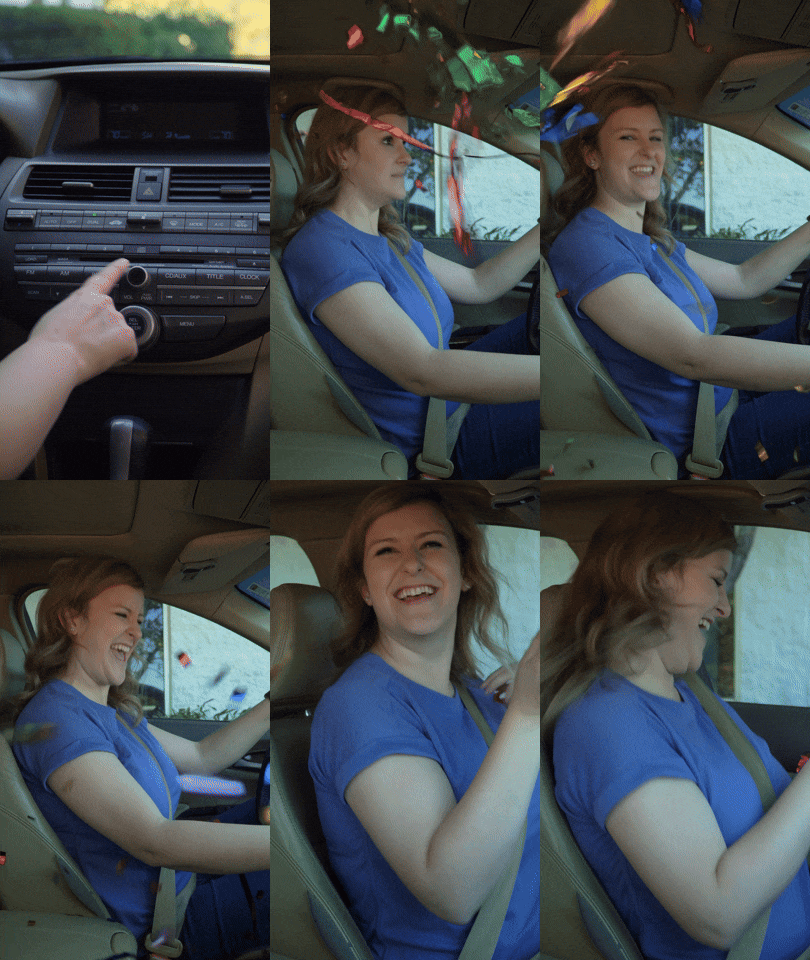
Cyfle i ddatgysylltu am hanner awr.
A chance to disconnect for half an hour.
Osgoi cwestiynu eich plentyn ar y daith gartref: beth am i chi ddweud am eich diwrnod chi, neu i chi wrando ar ganeuon?
Avoid questioning your child on the journey home: how about saying about your day, or to listen to some of their favourite songs?

5. Rheoli amser sgrin / Setting parameters for screen time
Mae gwylio'r teledu, defnyddio cyfrifiaduron, gliniaduron, ipads, xbox neu Playstation yn gallu bod yn ffordd effeithio i ymlacio ac yn ffordd effeithiol i wobrwyo, ond nid ydynt yn iach fel prif ffocws noson a dylent gael eu defnyddio yn achlysurol yn unig.
Watching television, the use of computers, tablets, ipads, xbox or Playstation can be an effective form of relaxing or as a prize, but they are only healthy in moderation and should not be used regularly.
Mae defnydd gormodol o offer o'r fath yn cael effeithiau andwyol ar dwf cymdeithasol ac emosiynol, gan gynnwys cynnydd yn y tebygolrwydd o ordewdra, anhwylderau cysgu, a chyflyrau iechyd meddwl gan gynnwys iselder a phryder.
Excessive screen usage has detrimental effects on social and emotional growth, including a rise in the likelihood of obesity, sleep disorders, and mental health conditions including depression and anxiety.

Beth am osgoi defnydd o ddyfeisiau (cyfrifiaduron a thabledi) yn ystod yr wythnos, a'u cael fel gwobr ar benwythnos os yn ei haeddu?
How about avoid using devices (computers and tablets) during the week, and to have them as a reward on the weekend if deserved?

6. Darllen / Reading
Mae Darllen yn un o'r sgiliau mwyaf pwysig, ac yn rhywbeth y gallech chi fel teuluoedd helpu eich plentyn i'w ddatblygu. Mae cymeryd yr amser - gyda'ch gilydd cyn mynd i'r gwely neu yn y gwely efallai - yn ffordd wych i chi wrando ar eich plentyn yn darllen, yn helpu i atgyfnerthu'r cyswllt emosiynol gyda'ch plentyn, i'w helpu a chefnogi i wneud cynnydd.
Reading is a priority skill, and is something you as families can help your child and to support their progress. Taking that valuable time - perhaps just before going to bed or even together in bed - is a fantastic opportunity to listen to your child reading, to show interest, to make an important emotional connection with your child, and to help them make progress.
Byddai eich plentyn hefyd yn mwynhau clywed chi'n darllen stori: i ddysgu oddi wrthoch chi, i chi rannu'ch diddordeb a chariad tuag at stori.
Your child would also love to hear you reading a story: to learn from you, for you to share an interest and love of stories.
Mae'r ysgol yn talu am danysgrifiad i wefan Darllenco, ac mae gan bob disgybl mynediad ato gan ddefnyddio eu gwybodaeth HWB:
The school has a subscription to the website Darllenco, and pupils have access to this using their HWB credentials:

Byddai patrwm o Ddarllen cyson fel rhan o drefn y nos yn helpu eich plentyn i ddatblygu patrwm cysgu effeithiol.
A regular Reading pattern as part of the nightly routine would therefore help to develop a better sleep routine.
Byddai 10 munud pob nos yn gallu cael effaith enfawr ar gynnydd eich plentyn, ac yn agor drysau ar gyfer y dyfodol.
Daily, 10 minute reading sessions with your child would have a huge impact on your child's progress, and in turn have a positive impact on their future.
7. Amser Gwely / Bedtime
Os yn gosod patrwm ar gyfer deffro yn y bore, mae angen yr un peth gyda'r hwyr.
Similarly to the morning, a night time routine is also crucial.
Mae plentyn sydd rhwng 3 a 5 oed angen rhwng 10 a 13 awr o gwsg.
Os yw eich plentyn 3-5 oed yn deffro am 7yb, mae angen iddynt fod yn cysgu erbyn rhwng 6yh a 9yh.
A child between 3 and 5 years old needs between 10 and 13 hours of sleep.
If your 3-5 year old wakes up at 7am, they should be asleep by between 6pm and 9pm at the very latest.

Mae plentyn sydd rhwng 6 a 12 oed angen rhwng 9 a 12 awr o gwsg.
Os yw eich plentyn 6-12 oed yn deffro am 7yb, mae angen iddynt fod yn cysgu erbyn rhwng 7yh a 10yh.
A child between 6 and 12 years old needs between 9 and 12 hours of sleep.
If your 6-12 year old wakes up at 7am, they should be asleep by between 7pm and 10pm at the very latest.
Mae astudiaethau yn dangos fod defnydd o ddyfeisiau o unrhyw fath yn amharu ar allu rhywun i syrthio i gysgu. Felly dylai plant fod oddi ar unrhyw ddyfais o leiaf dwy awr cyn mynd i'r gwely.
Studies show that the use of technological devices of any sort can impact ability to sleep. Therefore children should not be permitted to use devices within two hours of their bedtime.
Glendid bersonol: cofiwch golchi dannedd cyn mynd i'r gwely!
Personal hygiene: remember to clean teeth before bed!
8. Paratoi ar gyfer drannoeth / Prepare for tomorrow
Mae gosod y dillad neu gwisg ysgol cywir, i baratoi'r bag ysgol y noson gynt yn gallu helpu i osgoi panig yn y bore, ac yn help i sicrhau dechrau da ar gyfer y diwrnod newydd.
Preparing the school uniform or clothes, the school bag or PE kit the night before can help avoid panic and rushing the following morning, on what will be a new and fresh day.
9. Sut rydych yn holi eich plentyn / How you question your child
Mae ymchwil yn awgrymu’n gryf na ddylid gofyn cwestiynau arweiniol i blant oherwydd eu bod yn agored iawn i awgrymiadau a gallant gynnwys gwybodaeth o’r cwestiwn ei hun yn hawdd yn eu hymatebion, gan ystumio eu hatgofion o bosibl ac arwain at adroddiadau anghywir am ddigwyddiadau, yn enwedig wrth drafod pynciau sensitif fel cam-drin. ; mae hyn oherwydd eu galluoedd gwybyddol datblygol a thueddiad i ddylanwad gan oedolion.
Research strongly indicates that children should not be asked leading questions because they are highly susceptible to suggestion and can easily incorporate information from the question itself into their responses, potentially distorting their memories and leading to inaccurate accounts of events, especially when discussing sensitive topics like abuse; this is due to their developing cognitive abilities and susceptibility to influence from adults.
Bydd ymddygiadau positif, fel dangos empathi, amynedd, a chydnerth, yn dysgu plant sut i ymdrin â bywyd gyda hyder a charedigrwydd. Ar y llaw arall, gall negyddrwydd neu gyflyrau heb eu datrys ddylanwadu ar iechyd emosiynol a phenderfyniadau’r plentyn. Cofiwch mai chi yw’r modelau rôl cyntaf a phwysicaf yn eu bywydau, ac mae eich hagwedd tuag at heriau, perthnasoedd, a phlant yn cael effaith uniongyrchol ar ddatblygiad y plentyn. Gall ymdrechion beunyddiol bach i ddangos agweddau positif greu newid parhaol.
Positive behaviours, like showing empathy, patience, and resilience, teach children how to navigate life with confidence and kindness. Conversely, negativity or unresolved conflicts can influence a child's emotional health and decision-making. Remember that you are the first and most significant role models in your child's life, and their approach to challenges, relationships, and emotions directly impacts the child’s growth and worldview. Small daily efforts to model positivity can create lasting, positive change.
Toileda / Toileting
Onibai fod anghenion meddygol penodol, neu anghenion addysgu penodol gan eich plentyn, fe ddylai pob plentyn fod yn dechrau yn yr ysgol allan o gewynnau ac yn gallu defnyddio'r tŷ bach.
Unless your child has a specific medical need or additional learning need, pupils should not require the use of nappies and should be toilet-trained when they start school.
Ar ein ffurflen ganiatâd mae hawl gan rieni neu gwarcheidwaid i ganiatau i staff helpu disgyblion yn y Dysgu Sylfaen sydd wedi cael damweiniau yn ystod y dydd, ac yn hapus iawn i helpu gan fod hyn yn gallu digwydd yn ystod prysurdeb diwrnod ysgol.
Our consent form contains a question where parents or guardians can give staff the right to help their child change if they have had a toileting accident in the Foundation Phase, and we're more than happy to help these pupils on these occasions as they can easily happen during the busy school day.
Presenoldeb / Attendance
Mae pawb yn mwynhau patrwm a chysondeb, ac mae'r ysgol yn rhan bwysig iawn o hynny. Er mwyn i ninnau fel ysgol allu cynorthwyo eich plentyn, ac i geisio sicrhau cynnydd parhaus, mae angen gwneud pob ymdrech i sicrhau fod presenoldeb eich plentyn mor uchel â phosibl.
Mae mynychu'r ysgol yn darparu'r cyfle i wneud cynnydd academaidd, ond yr un mor bwysig yw'r gallu i ddatblygu perthnasoedd ac i datblygu sgiliau cymdeithasol;
os nad ydynt yn bresennol, maent yn colli allan.
Most prefer routine and structure, and school life is a crucial part to support this. In order to offer the best chance to show improvement and progress, your child needs to attend school as regularly as possible.
By being at school, it's not only academic progress that's available, but also crucial interaction with others and developing social skills;
if they're not at school, they're missing out.
Mae ddoe wedi mynd, mae heddiw'n eiddo i ni; 'dyw fory heb ei gyffwrdd, mae'r dyfodol yn ein dwylo ni. Beth wnawn ni i geisio creu dyfodol gwell?
Yesterday is history, tomorrow is a mystery; today is a gift, and that's why we call it 'The Present'. What can we do today to help make a better tomorrow?
Yr iaith Gymraeg / The Welsh language
Nid yw pob teulu yn siarad Cymraeg gartref, felly dyma linc i adnodd all fod o gymorth i chi ddefnyddio peth Gymraeg i gyfoethogi addysg eich plentyn.
We have many families that do not speak Welsh at home, and have therefore prepared a link to a resource that could be useful and could enrich your child's education.
Credits:
Created with images by Bits and Splits - "Business woman with question mark looking for answers" • aradaphotography - "White toilet bowl in a bathroom" • Antony McAulay - "Supporter of Wales"