Table of Contents
- Capstone Project Description
- ACOTE Area of Focus
- Area of Practice
- Capstone Project Site
- Mission and Vision Connection
- Needs Assessment
- Literature Review
- Theoretical/Conceptual Framework
- Logic Model
- Project Outcomes
- Capstone Deliverables
- Future Implications
- References
Capstone Project Description
This capstone project focuses on improving orthotic fabrication skills for therapists at Doctors Hospital of Laredo Outpatient Rehabilitation. A needs assessment revealed gaps in consistency, confidence, and decision-making during the fabrication of custom hand and wrist orthoses. To address this, the project introduced a structured training program that includes a self-paced online learning module, a hands-on fabrication workshop, and pre- and post-training surveys to measure growth in confidence and skill. The goal of this project is to provide clear guidance, strengthen clinical reasoning, and ensure therapists feel more prepared to fabricate orthoses that support patient recovery. This project aligns with the ACOTE focus area of Clinical Practice Skills and was developed to enhance staff competency while promoting better outcomes for patients receiving hand therapy services.
ACOTE Area of Focus
Area of Practice
Capstone Project Site
Doctors Hospital of Laredo Outpatient Rehabilitation is a hospital-based clinic that provides comprehensive services including hand therapy, physical rehabilitation, neurological rehabilitation, lymphedema management, and pelvic floor therapy. The interdisciplinary team treats patients recovering from orthopedic injuries, post-surgical upper extremity conditions, stroke, and other functional limitations. The clinic’s strong focus on upper extremity care made it an ideal setting for implementing an orthotic fabrication training program to support therapist consistency and competence.
Mission and Vision Connection
This capstone project aligns closely with the philosophy of Hanover’s Doctor of Occupational Therapy (OTD) program by promoting evidence-based, occupation-focused clinical education (Hanover College, 2025a). Through the development of an orthotic training program, the project will support the mission of the OTD program of lifelong learning, advocacy, scholarship, and service to individuals, communities, and populations (Hanover College, 2025b). The experience also fosters leadership, innovation, and interprofessional collaboration, which are elements of the philosophy and professional expectations of the OTD program (Hanover College, 2025a). In addition, the capstone reflects the pillars of American Occupational Therapy Association’s (AOTA) Vision 2030 by promoting client-centered care and advancing occupational therapy practice, education, and research (American Occupational Therapy Association, 2025) . The project’s emphasis on skill-building and access to high-quality learning materials supports the vision of AOTA.
Needs Assessment
- Therapists reported limited confidence and inconsistent skills in orthotic fabrication, particularly for arthritis, neurologic, and geriatric populations.
- High caseloads and time constraints limit clinicians’ ability to complete orthotic-related tasks during treatment sessions.
- Staff identified gaps in access to materials, structured training opportunities, and standardized guidelines for fabrication and clinical reasoning.
- Variability in fabrication techniques and decision-making across practitioners results in inconsistent orthotic use and missed opportunities to optimize patient outcomes.
- Therapists expressed strong interest in receiving training that would strengthen competence, confidence, and consistency in orthotic fabrication.
- Findings support the need for accessible education, hands-on learning opportunities, and resources that promote clinician skill development in custom orthosis fabrication.
Sources: L. Harris, personal communication, March 28, 2025; M. Manrique, personal communication, March 30, 2025; R. Ramirez, personal communication, March 27, 2025; V. Vazquez-Garcia, personal communication, March 27, 2025.
Literature Review
- Current upper-extremity orthotic classification systems do not guide clinical reasoning or assist therapists in choosing the appropriate orthosis, highlighting the need for structured decision-making support (Farzad, 2024).
- Therapists often rely more on clinical experience than academic preparation for splinting, which contributes to inconsistent practice and skill gaps in real-world settings (Kaunnil et al., 2022).
- Virtual orthotic training improves access but is less effective for novice clinicians due to limited hands-on feedback, supporting the need for hybrid models that combine online instruction with tactile learning (Schofield et al., 2024).
- Healthcare competency research consistently identifies formal training, real-time feedback, mentorship, and critical-thinking practice as key contributors to clinical skill development (Almarwani & Alzahrani, 2023; Portela Dos Santos et al., 2022).
- Hybrid and blended education models have been shown to significantly improve skill acquisition and confidence among healthcare staff, reinforcing the effectiveness of combining online modules with in-person workshops (Siddiqui et al., 2024).
- Research in prosthetics and orthotics education reveals inconsistent instructional quality across programs and supports the need for standardized, evidence-based training frameworks in clinical settings (McDonald et al., 2020).
Theoretical/Conceptual Framework
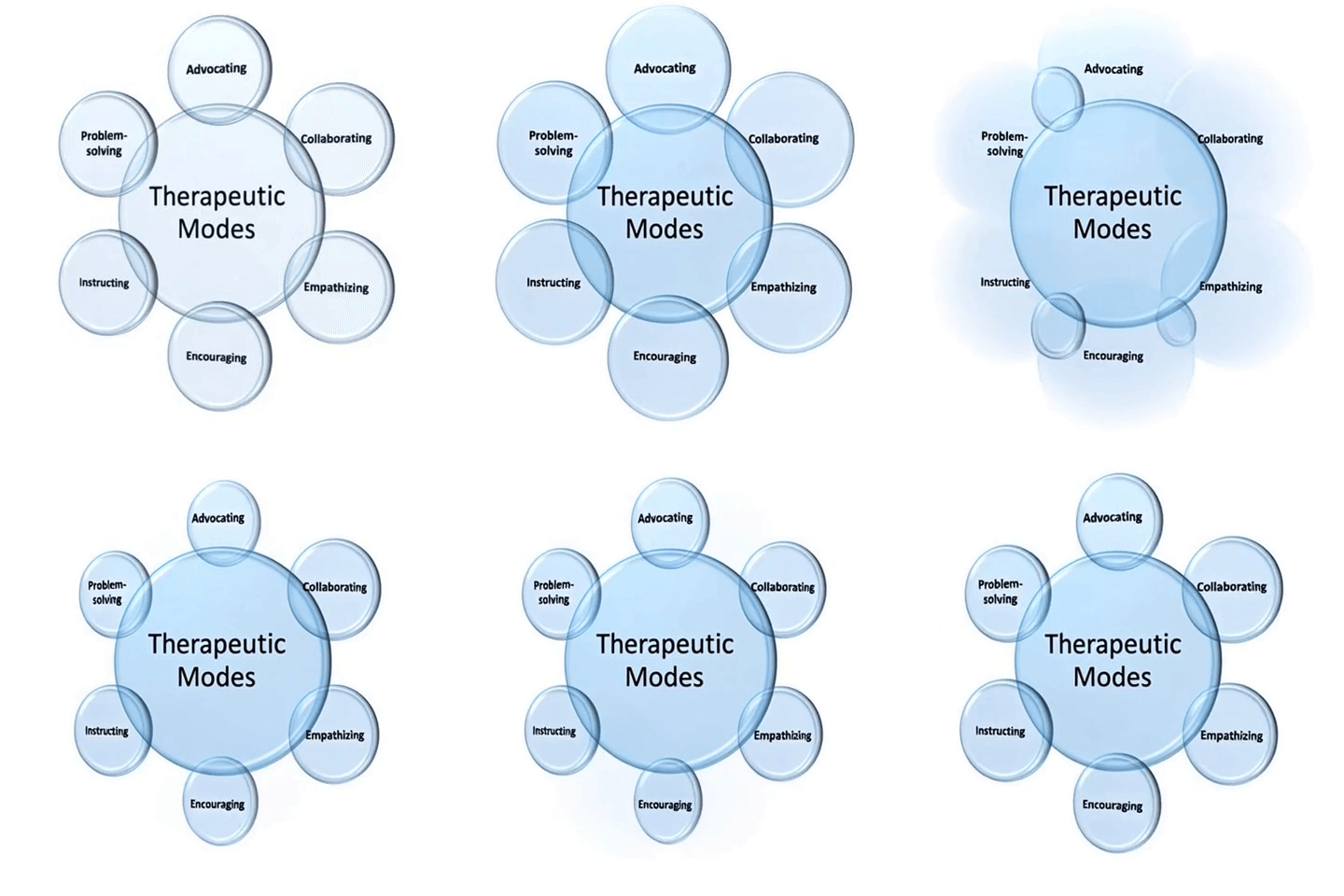
The proposed doctoral capstone project aims to implement a structured orthotic training program for the therapy staff at Doctors Hospital of Laredo. The goal of the capstone is to address gaps in clinical reasoning, consistency, and confidence identified in orthotic fabrication practices at their outpatient therapy clinic. The Intentional Relationship Model (IRM) will serve as the guiding theoretical framework for this capstone project. The IRM focuses on the therapeutic use of self and emphasizes six modes of communication: advocating, collaborating, empathizing, encouraging, instructing, and problem-solving (Gillen et al., 2024). In the context of this capstone, the model will be used to support learning and professional development by allowing the instructor to better respond to the learners needs, build trust, and create a positive environment that will promote confidence and clinical reasoning in orthotic practice. A key principle of the IRM is the therapeutic relationship and when used intentionally, it can positively impact outcomes such as trust, engagement, and motivation (Gillen et al., 2024). These outcomes will encourage active engagement and foster confidence while developing orthotic fabrication skills during this capstone experience. Application to Capstone Project In applying the IRM, the six modes of communication will be intentionally used to guide the design and delivery of all the components of this capstone. Advocating will ensure that the training addresses the identified staff needs and access to resources based on evidence-based practice. The therapeutic mode of collaborating will foster group decision-making strategies during the hands-on workshop. Empathizing will be applied to acknowledge challenges the staff may experience when developing new fabrication skills and encouraging will help to improve confidence throughout the training process. Instructing and problem-solving will be central to the self-guided module and orthopedic fabrication workshop, where clear directions and adult learning strategies will be necessary for skill acquisition. Evidence from pediatric rehabilitation indicates that intentional use of communication strategies enhances engagement and improves outcomes (Antoniadou et al., 2024). In addition, Taylor (2008) emphasizes that therapists must recognize clients’ interpersonal characteristics and intentionally adjust their communication mode to support learning and engagement. This principle will guide the approach in responding to staff needs, recognizing that different learners may prefer structure, feedback, or encouragement at the different stages of the program, and shifting modes accordingly will optimize their confidence and skill development. In addition to the narrative application, the following chart outlines how the IRM modes of communication will be intentionally applied to the structured orthotic training program (Taylor, 2008; Antoniadou et al., 2024).
Logic Model
The logic model shown below outlines the structure of the orthotic fabrication training program implemented at Doctors Hospital of Laredo Outpatient Rehabilitation. It describes how project inputs such as staff, materials, time, technology, and administrative support were used to develop training activities including hands-on workshops, online learning materials, and documentation guidance. These activities were created to improve therapist knowledge, confidence, and consistency in orthotic fabrication. The model also presents the expected short-term, medium-term, and long-term outcomes, showing how growth in clinical reasoning and technical skills can lead to improved patient care, greater efficiency, and sustained best practices in orthotic fabrication. This logic model served as a roadmap that guided the development, implementation, and evaluation of the capstone project.
Project Outcomes
The findings below demonstrate a clear rise in confidence among participants across every competency area measured. The data collected showed a shift toward agreement or strong agreement, which demonstrates that the combination of a structured module and hands-on practice strengthens clinical reasoning, as well as skill performance, when applying orthotic fabrication techniques in everyday practice.
Capstone Deliverables
Orthotic Fabrication Educational Materials
- Self-guided online orthotic fabrication module https://borderot.com/b/PDi7v
- Orthotic fabrication reference sheets created for staff (View PDF).
- Patient education materials for orthosis care, donning/doffing, and wear schedule (View PDF).
- Workshop PPT Presentation
Staff Training Assessments
- Pre-test competency survey assessing baseline confidence, knowledge, and clinical reasoning related to orthotic fabrication.
- Post-test competency survey measuring changes in confidence, application of skills, and clinical reasoning following completion of the module.
Visual and Data Deliverables
- Full set of charts used to illustrate changes between pre- and post-test responses.
Scholarly Documents
- Full Needs Assessment
- Literature Review
- Theoretical Framework
- Poster Presentation Synopsis
- Doctoral Capstone Poster
- Doctoral Capstone Poster Handout
Future Implications
Despite numerous CEU courses that are available to clinicians in orthotic fabrication, this project revealed a continued gap between formal training and day-to-day clinical confidence. Therapists often complete CEUs yet still seek clarification in the workplace, often relying on senior clinicians to guide orthosis selection and fabrication. The digital module, the clinician workshop, and all other deliverables developed through this capstone begin to bridge that gap by offering practical, clinic-specific education that supports real-world problem-solving. These tools can be expanded into hands-on workshops, integrated into staff onboarding, or scaled for use in other outpatient settings to promote evidence-based orthotic practice. This project strengthened my skills in upper extremity rehabilitation, instructional design, and clinical reasoning, which align with my long-term goals of becoming a Certified Hand Therapist and developing meaningful educational resources for future clinicians.
References
Almarwani, A. M., & Alzahrani, N. S. (2023). Factors affecting the development of clinical nurses’ competency: A systematic review. Nurse Education in Practice, 73, 103826. https://10.1016/j.nepr.2023.103826 American Occupational Therapy Association. (2025). Vision 2030. AOTA.org. https://www.aota.org/about/mission-vision/vision-2030 Antoniadou, M., Granlund, M., & Andersson, A. K. (2024). Strategies used by professionals in pediatric rehabilitation to engage the child in the intervention process: A scoping review. Physical & Occupational Therapy in Pediatrics, 44(4), 461–488. https://10.1080/01942638.2023.2290038 Farzad, M. (2024). Do current upper limb orthotic classification systems help clinicians choose and design effective orthoses? A scoping review with expert interviews. Journal of Hand Therapy, 37(1), 60–69. https://hanover.on.worldcat.org:443/atoztitles/link?sid=Entrez:PubMed Gillen, G., Brown, C. & Ramugondo, E. (2024). Core concepts and skills. In Willard and Spackman’s Occupational Therapy, (14ed.). Wolters Kluwer. https://ot.lwwhealthlibrary.com/content.aspx?sectionid=256466345&bookid=3280 Hanover College. (2025a). Academics. https://otdprogram.hanover.edu/. Retrieved Apr 14, 2025, from https://otdprogram.hanover.edu/academics/ Hanover College. (2025b). Overview. https://otdprogram.hanover.edu/. Retrieved Apr 14, 2025, from https://otdprogram.hanover.edu/ Kaunnil, A., Sansri, V., Thongchoomsin, S., Permpoonputtana, K., Stanley, M., Trevittaya, P., Thawisuk, C., & Thichanpiang, P. (2022). Bridging the gap between clinical service and academic education of hand-splinting practice: Perspectives and experiences of thai occupational therapists. International Journal of Environmental Research and Public Health, 19(15) https://10.3390/ijerph19158995 McDonald, C. L., Kartin, D., & Morgan, S. J. (2020). A systematic review in prosthetics and orthotics education research. Prosthetics and Orthotics International, 44(3), 116–132. Portela Dos Santos, O., Melly, P., Hilfiker, R., Giacomino, K., Perruchoud, E., Verloo, H., & Pereira, F. (2022). Effectiveness of educational interventions to increase skills in evidence-based practice among nurses: The EDITcare systematic review. Healthcare (Basel, Switzerland), 10(11), 2204. doi: 10.3390/healthcare10112204. https://10.3390/healthcare10112204 Schofield, K. A., Schwartz, D. A., & Bolch, C. (2024). Perspectives on remote learning of orthotic fabrication by certified hand therapists. Journal of Hand Therapy, 37(4), 572–582. https://10.1016/j.jht.2023.11.002 Siddiqui, A. S., Zehra, T., Ahmed, A., Rehman, A., Ahmed, U., & Afshan, G. (2024). Enhancing nursing staff clinical skills of pain assessment: Impact of the educational course. International Journal of Nursing Education, 16(3), 13–23. https://10.37506/jdp7j820 Taylor, R. R. (2008). Knowing our clients: Understanding interpersonal characteristics. The intentional relationship: Occupational therapy and use of self (pp. 99–116). F.A. Davis Company/Publishers.
Credits:
Created with images by Tanousch - "Empowering Hand Rehabilitation: A Patient's Journey to Strength and Recovery using Orthopedic Device.,Perfect for Healthcare Marketing and Promoting Medical Advancement." • Yuwarin - "wrist with pain in the medical color blue background" • SoftSheep - "hand muscle pain" • icarmen13 - "Hand therapy with physiotherapist"